
 0755-23179541
  sales@oyii.net
.png) 8618926041961
8618926041961
1.25Gbps 1550nm 60Km LC DDM
SFP Transceiver
1.25Gbps 1550nm 60Km LC DDM
Product Features
1. SFP package with LC connector.
2. 1550nm DFB laser and PIN photo detector.
3. Up to 60Km transmission on SMF.
4. +3.3V single power supply.
5. LVPECL compatible data input/output interface.
6. Low EMI and excellent ESD protection.
7. laser safety standard IEC-60825 compliant.
8. Compatible with RoHS.
9. Digital Diagnostic SFF-8472 compliant.
10. Signal Ground Isolated to Case.
Application
1. 1.25Gb/s 1000Base-LX Ethernet.
2. Dual Rate 1.06 / 2.125 Gb/s Fiber Channel.
Absolute Maximum Ratings:
|
Parameter |
Symbol |
Minimum |
Maximum |
Units |
|
Storage Temperature |
Tst |
-40 |
+85 |
℃ |
|
Supply Voltage |
Vcc |
0 |
+3.6 |
V |
|
Operating Relative Humidity |
RH |
5 |
95 |
% |
Operation Environment:
|
Parameter |
Symbol |
Min |
Typical |
Max |
Units |
|
Supply Voltage |
Vcc |
3.15 |
3.3 |
3.45 |
V |
|
Operating Case Temperature |
Tc |
0 |
|
+70 |
|
|
Power Dissipation |
|
|
|
1 |
W |
|
Data Rate |
|
|
1.25 |
|
Gbps |
Optical Characteristics
(Ambient Operating Temperature 0℃ to +70℃, Vcc =3.3 V)
|
Parameter |
Symbol |
Min. |
Typ. |
Max. |
Units |
|
Transmitter Section |
|||||
|
Center Wavelength |
λo |
1540 |
1550 |
1560 |
nm |
|
Spectral Width (RMS) |
△λ |
- |
- |
1 |
nm |
|
Average Output Power |
Po |
-5 |
- |
0 |
dBm |
|
Extinction Ratio |
Er |
8 |
- |
|
dB |
|
Rise/Fall Time (20%~80%) |
Tr/Tf |
|
|
180 |
ps |
|
Total jitter |
Tj |
|
|
0.43 |
UI |
|
Optical Eye Diagram |
IEEE 802.3z and ANSI Fiber Channel Compatible |
||||
|
Receiver Section |
|||||
|
Center Wavelength |
λo |
1260 |
|
1620 |
nm |
|
Receiver Sensitivity |
Rsen |
|
|
-24 |
dBm |
|
Receiver Overload |
Rov |
-3 |
|
|
dBm |
|
Return Loss |
|
12 |
|
|
dB |
|
LOS Assert |
LOSA |
-36 |
|
|
dBm |
|
LOS Dessert |
LOSD |
|
|
-25 |
dBm |
|
LOS Hysteresis |
|
0.5 |
|
5 |
|
Electrical Characteristics
(Ambient Operating Temperature 0℃ to +70℃, Vcc =3.3 V)
|
Parameter |
Symbol |
Min. |
Typ. |
Max. |
unit |
|
|
Transmitter Section |
||||||
|
Input Differential Impendence |
Zin |
90 |
100 |
110 |
Ohm |
|
|
Data Input Swing Differential |
Vin |
500 |
|
2400 |
mV |
|
|
TX Disable |
Disable |
|
2.0 |
|
Vcc |
V |
|
Enable |
|
0 |
|
0.8 |
V |
|
|
TX Fault |
Assert |
|
2.0 |
|
Vcc |
V |
|
Deassert |
|
0 |
|
0.8 |
V |
|
|
Receiver Section |
||||||
|
Output differential impendence |
Zout |
|
100 |
|
Ohm |
|
|
Data Input Swing Differential |
Vout |
370 |
|
2000 |
mV |
|
|
Rx_LOS |
Assert |
|
2.0 |
|
Vcc |
V |
|
Deassert |
|
0 |
|
0.8 |
V |
|
EEPROM INFORMATION(A0)
|
Addr |
Field Size (Bytes) |
Name of Field |
HEX |
Description |
|
0 |
1 |
Identifier |
03 |
SFP |
|
1 |
1 |
Ext. Identifier |
04 |
MOD4 |
|
2 |
1 |
Connector |
07 |
LC |
|
3-10 |
8 |
Transceiver |
00 00 00 02 12 00 0D 01 |
Transmitter Code |
|
11 |
1 |
Encoding |
01 |
8B10B |
|
12 |
1 |
BR, nominal |
0D |
1250M bps |
|
13 |
1 |
Reserved |
00 |
|
|
14 |
1 |
Length (9um)-km |
3C |
60km |
|
15 |
1 |
Length (9um) |
64/C8/FF |
|
|
16 |
1 |
Length (50um) |
00 |
|
|
17 |
1 |
Length (62.5um) |
00 |
|
|
18 |
1 |
Length (copper) |
00 |
|
|
19 |
1 |
Reserved |
00 |
|
|
20-35 |
16 |
Vendor name |
57 49 4E 54 4F 50 20 20 20 20 20 20 20 20 20 20 |
WINTOP |
|
36 |
1 |
Reserved |
00 |
|
|
37-39 |
3 |
Vendor OUI |
00 00 00 |
|
|
40-55 |
16 |
Vendor PN |
xx xx xx xx xx xx xx xx xx xx xx xx xx xx xx xx |
ASC II |
|
56-59 |
4 |
Vendor rev |
31 2E 30 20 |
V1.0 |
|
60-61 |
2 |
Wavelength |
06 0E |
1550nm |
|
62 |
1 |
Reserved |
00 |
|
|
63 |
1 |
CC BASE |
XX |
Check sum of byte 0~62 |
|
64-65 |
2 |
Options |
00 1A |
LOS, TX_DISABLE, TX_FAULT |
|
66 |
1 |
BR, max |
32 |
50% |
|
67 |
1 |
BR, min |
32 |
50% |
|
68-83 |
16 |
Vendor SN |
00 00 00 00 00 00 00 00 00 00 00 00 00 00 00 00 |
Unspecified |
|
84-91 |
8 |
Vendor date code |
XX XX XX 20 |
Year, Month, Day |
|
92-94 |
3 |
Reserved |
00 |
|
|
95 |
1 |
CC_EXT |
XX |
Check sum of byte 64~94 |
|
96-255 |
160 |
Vendor specific |
|
Diagnostics
|
Parameter |
Range |
Accuracy |
Unit |
Calibration |
|
Temperature |
0~70 |
±3 |
℃ |
Internal |
|
Voltage |
3.15~3.45 |
0.1 |
V |
Internal |
|
Bias Current |
10~80 |
±2 |
mA |
Internal |
|
Tx Power |
-6~1 |
±2 |
dBm |
Internal |
|
Rx Power |
-26~-3 |
±3 |
dBm |
Internal |
Pin Description
|
Pins |
Name |
Description |
NOTE |
|
1 |
VeeT |
Transmitter Ground |
|
|
2 |
Tx Fault |
Transmitter Fault Indication |
1 |
|
3 |
Tx Disable |
Transmitter Disable |
2 |
|
4 |
MOD DEF2 |
Module Definition 2 |
3 |
|
5 |
MOD DEF1 |
Module Definition 1 |
3 |
|
6 |
MOD DEF0 |
Module Definition 0 |
3 |
|
7 |
Rate Select |
Not Connected |
|
|
8 |
LOS |
Loss of Signal |
4 |
|
9 |
VeeR |
Receiver Ground |
|
|
10 |
VeeR |
Receiver Ground |
|
|
11 |
VeeR |
Receiver Ground |
|
|
12 |
RD- |
Inv. Received Data Output |
S |
|
13 |
RD+ |
IReceived Data Output |
S |
|
14 |
VeeR |
Receiver Ground |
|
|
15 |
VccR |
Receiver Power |
|
|
16 |
VccT |
Transmitter Power |
|
|
17 |
VeeT |
Transmitter Ground |
|
|
18 |
TD+ |
Transmit Data Input |
6 |
|
19 |
TD- |
Inv. Transmit Data Input |
6 |
|
20 |
VeeT |
Transmitter Ground |
Notes:
1. TX Fault is an open collector output, which should be pulled up with a 4.7k~10kΩ resistor on the host board to a voltage between 2.0V and Vcc+0.3V. Logic 0 indicates normal operation; logic 1 indicates a laser fault of some kind. In the low state, the output will be pulled to less than 0.8V.
2. TX Disable is an input that is used to shut down the transmitter optical output. It is pulled up with in the module with a 4.7k~10kΩ resistor. Its states are:
Low (0~0.8V): Transmitter on
(>0.8V, <2.0V): Undefined
High (2.0~3.3V): Transmitter Disabled
Open: Transmitter Disabled
3. MOD-DEF 0,1,2 are the module definition pins. They should be pulled up with a 4.7k~10kΩresistor on the host board. The pull-up voltage shall be VccT or VccR.
MOD-DEF 0 is grounded by the module to indicate that the module is present.
MOD-DEF 1 is the clock line of two wire serial interface for serial ID.
MOD-DEF 2 is the data line of two wire serial interface for serial ID.
4. LOS is an open collector output, which should be pulled up with a 4.7k~10kΩ resistor on the host board to a voltage between 2.0V and Vcc+0.3V. Logic 0 indicates normal operation; logic 1 indicates loss of signal. In the low state, the output will be pulled to less than 0.8V.
5. These are the differential receiver output. They are internally AC-coupled 100Ω differential lines which should be terminated with 100Ω (differential) at the user SERDES.
6. These are the differential transmitter inputs. They are AC-coupled, differential lines with 100Ω differential termination inside the module.
Recommended Application Circuit

Outline Dimensions (mm)

-

OYI-FAT 24C
This box is used as a termination point for the feeder cable to connect with drop cable in FTTX communication network system. It intergates fiber splicing, splitting, distribution, storage and cable connection in one unit. Meanwhile, it provides solid protection and management for the FTTX network building. -

OYI-FAT H08C
This box is used as a termination point for the feeder cable to connect with drop cable in FTTX communication network system. It integrates fiber splicing, splitting, distribution, storage and cable connection in one unit. Meanwhile, it provides solid protection and management for the FTTX network building. -
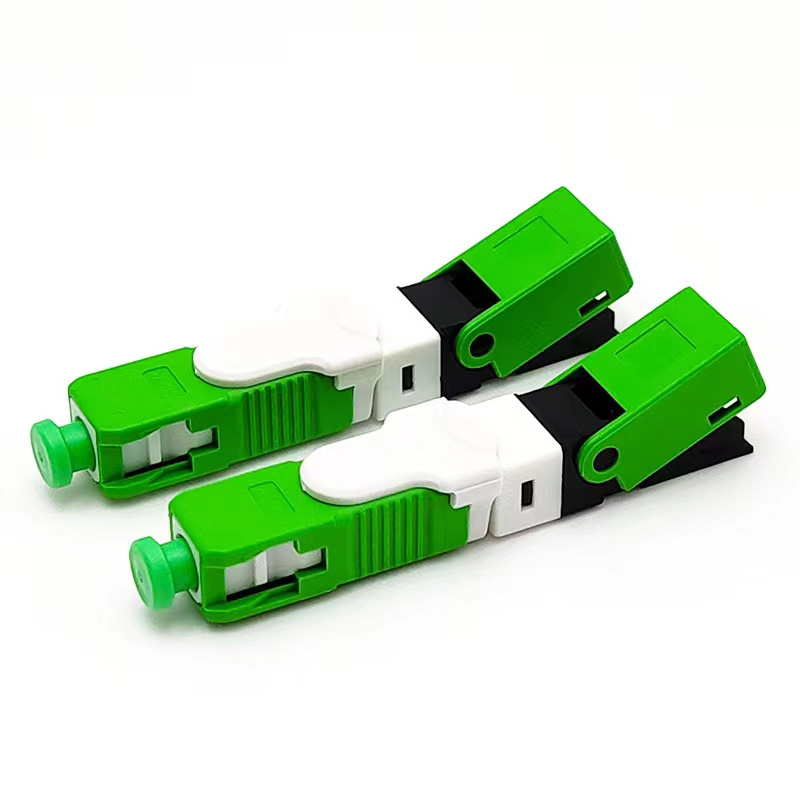
OYI A Type Fast Connector
Our fiber optic fast connector, the OYI A type, is designed for FTTH (Fiber To The Home), FTTX (Fiber To The X). It is a new generation of fiber connector used in assembly and can provide open flow and precast types, with optical and mechanical specifications that meet the standard for optical fiber connectors. It is designed for high quality and high efficiency during installation, and the structure of the crimping position is a unique design. -

OYI-FATC 8A Terminal Box
The 8-core OYI-FATC 8A optical terminal box performs in accordance with the industry standard requirements of YD/T2150-2010. It is mainly used in the FTTX access system terminal link. The box is made of high-strength PC, ABS plastic alloy injection molding, which provides good sealing and aging resistance. In addition, it can be hung on the wall outdoors or indoors for installation and use. The OYI-FATC 8A optical terminal box has an inner design with a single-layer structure, divided into the distribution line area, outdoor cable insertion, fiber splicing tray, and FTTH drop optical cable storage. The fiber optical lines are very clear, making it convenient to operate and maintain. There are 4 cable holes under the box that can accommodate 4 outdoor optical cables for direct or different junctions,and it can also accommodate 8 FTTH drop optical cables for end connections. The fiber splicing tray uses a flip form and can be configured with 48 cores capacity specifications to accommodate the box’s expansion needs. -
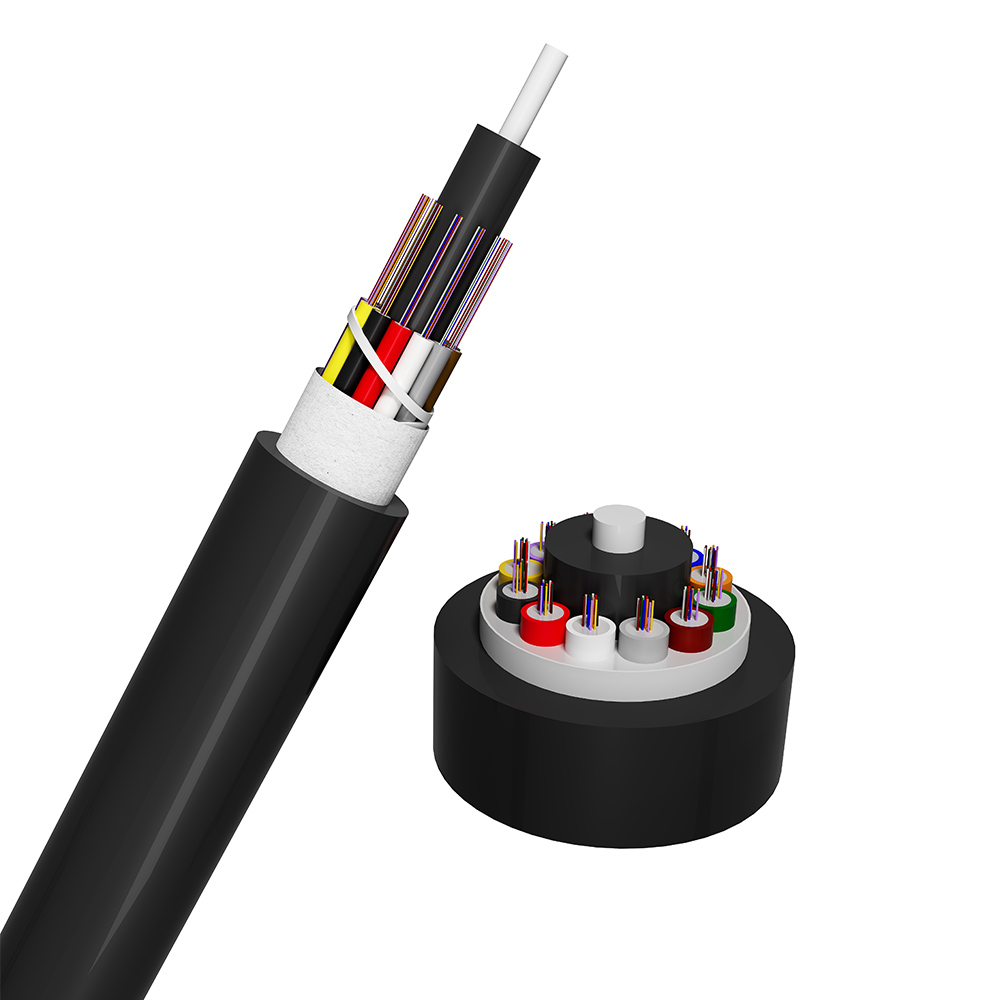
Loose Tube Non-metallic & Non-armored Fibe...
The structure of the GYFXTY optical cable is such that a 250μm optical fiber is enclosed in a loose tube made of high modulus material. The loose tube is filled with waterproof compound and water-blocking material is added to ensure longitudinal water-blocking of the cable. Two glass fiber reinforced plastics (FRP) are placed on both sides, and finally, the cable is covered with a polyethylene (PE) sheath through extrusion. -
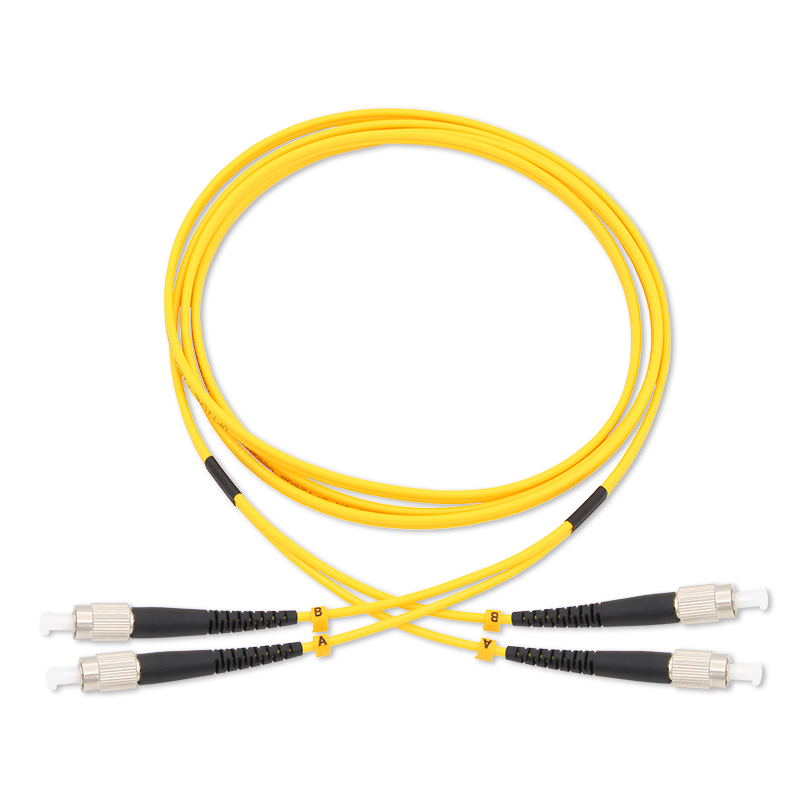
Duplex Patch Cord
OYI fiber optic duplex patch cord, also known as a fiber optic jumper, is composed of a fiber optic cable terminated with different connectors on each end. Fiber optic patch cables are used in two major application areas: connecting computer workstations to outlets and patch panels or optical cross-connect distribution centers. OYI provides various types of fiber optic patch cables, including single-mode, multi-mode, multi-core, armored patch cables, as well as fiber optic pigtails and other special patch cables. For most patch cables, connectors such as SC, ST, FC, LC, MU, MTRJ, DIN and E2000 (APC/UPC polish) are available. Additionally, we also offer MTP/MPO patch cords.
If you're looking for a reliable, high-speed fibre optic cable solution, look no further than OYI. Contact us now to see how we can help you stay connected and take your business to the next level.
