 0755-23179541
  sales@oyii.net
.png) 8618926041961
8618926041961
Kenya's Digital Revolution & The Demand for Fusing Splitter Optics
Kenya is widely recognized as East Africa's leading technology hub, often referred to as the "Silicon Savannah." With major initiatives like the Konza Technopolis smart city project and the continuous expansion of nationwide broadband infrastructure, the country is witnessing an unprecedented surge in high-speed internet demand. Telecom operators such as Safaricom, Telkom Kenya, and Jamii Telecommunications are aggressively rolling out Fiber-to-the-Home (FTTH) and Fiber-to-the-Building (FTTB) networks to urban and suburban centers alike.
At the heart of these massive fiber deployments lies the fusing splitter optic. As a critical passive optical component, it allows a single optical interface to be shared among multiple end-users. Fused Biconical Taper (FBT) splitters and Planar Lightwave Circuit (PLC) splitters enable service providers to distribute bandwidth efficiently, reducing physical cabling costs while maintaining high-speed signal integrity. As local demand grows, reliable factories and exporters are essential to ensure the seamless supply of high-grade optical components.
• FTTH Expansion: Connecting major cities like Nairobi, Mombasa, Kisumu, and Nakuru.
• 5G Backhaul Networks: High-density optical networks to support rapid 5G tower deployment.
• Government Digitization: Connecting public offices, schools, and health facilities to the National Optic Fibre Backbone Infrastructure (NOFBI).
Fusing Splitter Optic Technology: FBT vs. PLC
Choosing the right splitting technology is critical for network performance and long-term reliability. In the Kenyan market, both FBT (Fused Biconical Taper) and PLC (Planar Lightwave Circuit) splitters have distinct applications:
1. Fused Biconical Taper (FBT) Splitters
FBT splitters are manufactured by fusing two or more fibers together under heat. This traditional technology is highly cost-effective for smaller split configurations (such as 1x2, 2x2, or 1x4) and allows customizable coupling ratios (e.g., 90/10 or 70/30). They are ideal for local CATV distribution and monitoring systems where asymmetric splitting is required.
2. Planar Lightwave Circuit (PLC) Splitters
For larger split ratios (1x8, 1x16, 1x32, 1x64) required in modern PON (Passive Optical Networks), PLC splitters are the industry standard. Utilizing silica glass waveguide circuits, they offer uniform splitting with minimal loss across all channels, making them the preferred choice for dense FTTH networks in urban Nairobi.
Metropolitan FTTH Deployments: Kenyan internet service providers (ISPs) utilize splitting technology inside Fiber Access Terminal (FAT) boxes to distribute fiber connections to residential apartments. This reduces the deployment footprint and minimizes installation costs.
Utility and Smart Grid Monitoring: High-voltage transmission lines managed by Kenya Power utilize OPGW (Optical Ground Wire) systems. Fusing splitters facilitate data extraction for monitoring grid health and communication networks.
Oyi International Co., Ltd.
Oyi international., Ltd. is a dynamic and innovative fibre optic cable company based in Shenzhen, China. Since its inception in 2006, OYI has been dedicated to providing world-class fibre optic products and solutions to businesses and individuals across the globe. Our Technology R&D department has more than 20 specialized staff committed to developing innovative technologies and providing high-quality products and services. We export our products to 143 countries and have established long-term partnerships with 268 clients.
Our products are widely used in telecommunications, data center, CATV, industrial and other areas. Our main products include various types of optical fiber cables, fiber optic linkers, fiber distribution series, fiber optic connectors, fiber optic adapters, fiber optic couplers, fiber optic attenuators, and WDM series. Not only that, our products cover ADSS, ASU, Drop Cable, Micro Duct Cable, OPGW, Fast Connector, PLC Splitter, Closure, FTTH Box, etc. In addition, we provide our customers with complete fiber optic solutions, such as Fiber to the Home (FTTH), Optical Network Units (ONUs), and High Voltage Electrical Power Lines. We also provide OEM designs and financial support to help our customers integrate multiple platforms and reduce costs.
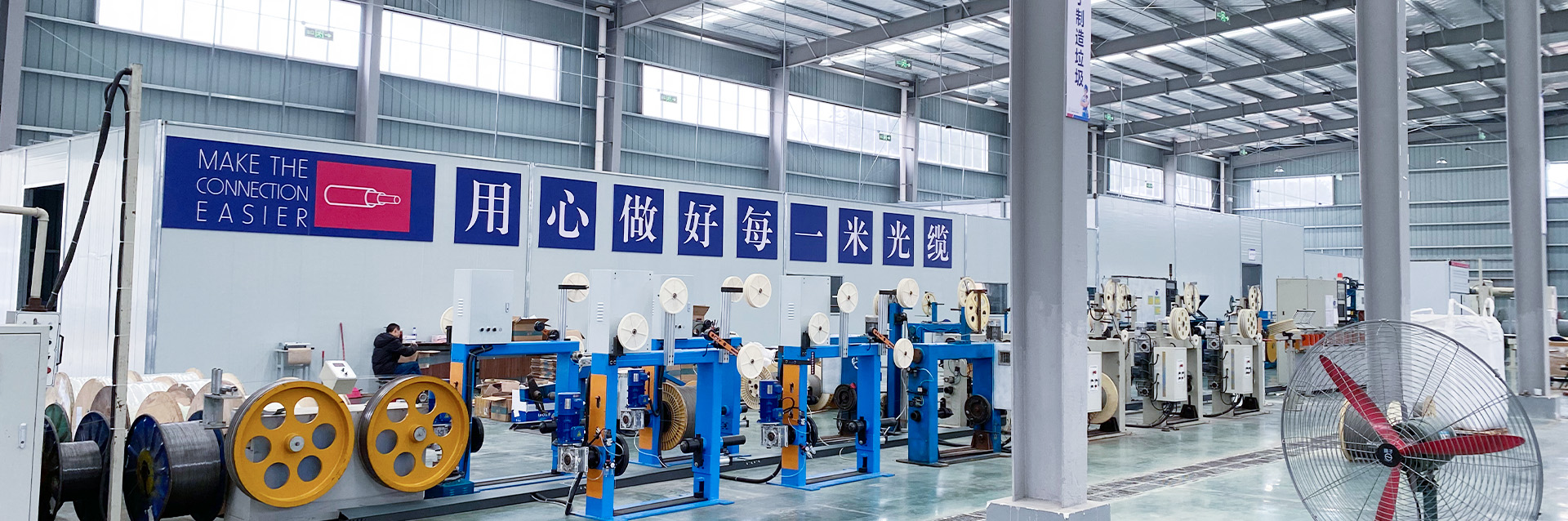
-
20 Years
Time in The Industry Sector
-
20+
Technical R&D Personnel
-
143 Countries
Exporting Countries
-
268 Clients
Cooperative Clients
About Oyi


Company Philosophy / About us
We are committed to innovation and excellence. Our team of experts are constantly pushing the boundaries of what’s possible, ensuring that we remain at the forefront of the industry. We invest heavily in research and development to ensure that we are always one step ahead of the competition. Our cutting-edge technology allows us to produce fibre optic cables that are not only faster and more reliable, but also more durable and cost-effective.
Our advanced manufacturing process ensures that our fibre optic cables are of the highest quality, guaranteeing lightning-fast speeds and reliable connectivity. Our commitment to excellence means that our customers can always rely on us to provide them with the best possible solutions.
If you’re looking for a reliable, high-speed fibre optic cable solution, look no further than OYI. Contact us now to see how we can help you stay connected and take your business to the next level.
Key Industry Trends Shaping Kenya's Optic Fiber Sector
The telecommunications market in Kenya is undergoing significant structural changes. As the country moves toward full digital inclusion, several trends are defining the future of optical passive components:
Localization of Network Hardware Supply
Kenyan network installers and engineering firms are actively seeking reliable global exporters that provide fast transit times to the Port of Mombasa. By partnering directly with experienced manufacturers like OYI, local companies can secure customized OEM designs for PLC splitters and distribution boxes that fit the unique environmental and physical constraints of East African installations.
High-Density and Miniaturized Distribution
With real estate prices climbing in cities like Nairobi and Mombasa, ISPs are opting for high-density, small-footprint solutions. Micro duct cables and compact PLC splitters allow operators to maximize physical pipe space and cabinet capacity, significantly reducing civil engineering costs.
Quality Assurance and International Standards
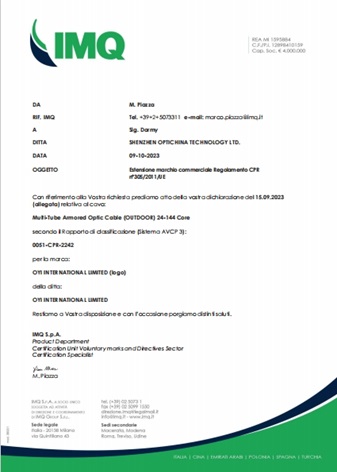
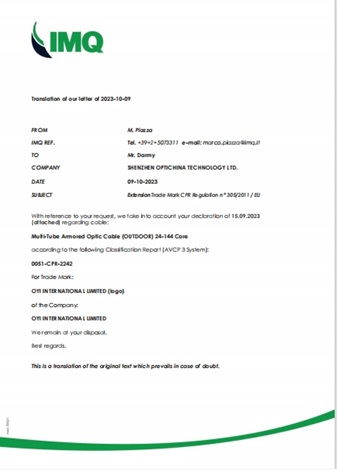
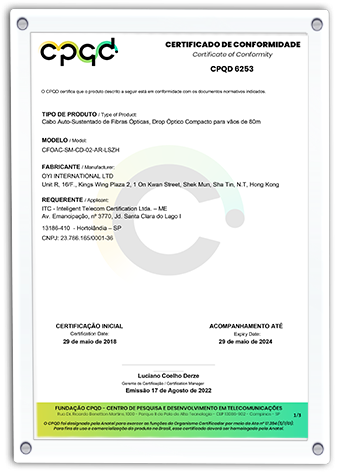
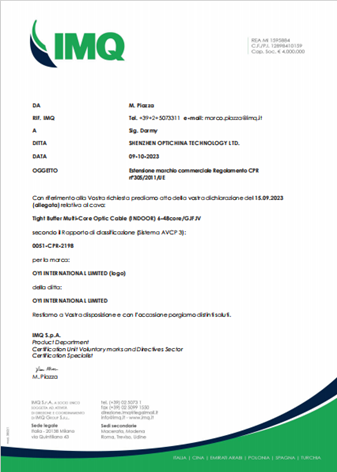
To participate in large-scale government and utility tenders in East Africa, optical products must adhere to stringent quality benchmarks. Certifications such as CPR (Construction Products Regulation) and international quality standards guarantee that the cables and splitters deployed can withstand tropical climates and offer a lifespan exceeding 25 years.
The Company has Obtained Certification