 0755-23179541
  sales@oyii.net
.png) 8618926041961
8618926041961Featured FTTx Network Infrastructure Solutions
Deploy high-speed broadband networks reliably with our industry-standard fiber management and anchoring systems.
Understanding the Crucial Role of Media Convertor Optic in Modern FTTx Network Deployments
The global demand for high-speed, reliable telecommunication infrastructure has reached unprecedented heights. As industries, municipal bodies, and residential complexes transition toward digital-first frameworks, fiber-to-the-x (FTTx) network deployments have emerged as the gold standard of modern connectivity. However, the migration from legacy copper-based networks to complete optical infrastructures is rarely a simple, overnight process. This is where the Media Convertor Optic plays an indispensable role.
A media converter optic acts as the bridge connecting disparate media types—specifically converting electrical signals carried by copper Unshielded Twisted Pair (UTP) cabling into optical signals transmitted over fiber optic cables. In FTTx deployments, these devices enable telecommunication operators and enterprise network managers to extend the reach of their networks far beyond the 100-meter limitation of standard copper Ethernet. By integrating optical media converters, organizations can leverage the high bandwidth and low attenuation of optical fiber while preserving their existing investments in legacy copper hardware.
Distance Extension
Overcome the 100m copper limit, extending gigabit data transmission up to 120km using single-mode fiber optic links.
EMI/RFI Immunity
Fiber optic transmission is immune to electromagnetic interference, ensuring clean data transmission in industrial environments.
Cost Efficiency
Avoid expensive complete hardware overhauls by converting copper ports to optical interfaces only where needed.
Commercial and Industrial Status of FTTx Optical Media Conversion
In today's commercial landscape, FTTx deployments are no longer confined to residential Fiber-to-the-Home (FTTH) schemes. Fiber-to-the-Building (FTTB), Fiber-to-the-Curb (FTTC), and Fiber-to-the-Office (FTTO) are expanding rapidly. The global market for optical media converters is experiencing robust growth, driven by the rollout of 5G small cells, smart city initiatives, and the digital transformation of industrial manufacturing plants (Industry 4.0).
Industrially, media converters are deployed in harsh environments where extreme temperatures, electrical noise, and physical vibrations are common. Industrial-grade media converters are housed in ruggedized DIN-rail enclosures (often integrated with distribution systems like the OYI-DIN-FB Series) and feature redundant power inputs. These units ensure that critical data from IP surveillance cameras, SCADA systems, and traffic controllers can be converted to optical signals and transmitted back to central monitoring stations without latency or risk of signal degradation.
Key Technological Trends Shaping FTTx Deployments
As network architectures evolve, several key trends are defining the development and deployment of media convertor optics:
1. Wavelength Division Multiplexing (WDM) Integration
Modern FTTx deployments heavily rely on WDM technology, which allows the transmission of multiple data streams over a single strand of fiber by using different wavelengths of light. Single-fiber (BiDi) media converters utilize WDM to transmit and receive data simultaneously on one optical fiber. This effectively halves the fiber cabling costs and simplifies physical fiber management in high-density distribution hubs.
2. Power over Ethernet (PoE) Media Conversion
The intersection of fiber optics and PoE technology has revolutionized device deployment. PoE media converters not only convert optical signals to copper Ethernet but also inject electrical power into the copper cable. This enables the seamless connection and powering of remote IP cameras, wireless access points, and VoIP phones located in areas where local power outlets are unavailable.
3. Transition to 10G and Beyond
With the rise of high-definition video streaming, cloud computing, and IoT device multiplication, networks are rapidly outgrowing Gigabit Ethernet. The demand for 10G media converters is surging, allowing service providers to upgrade backhaul networks without replacing the underlying fiber infrastructure.
Deep-Dive Application Scenarios of Media Convertor Optics
Scenario A: Smart City Surveillance and Security Systems
Municipal security networks require high-definition IP cameras to be installed across vast public spaces, parks, and roadways. Standard copper Ethernet cables cannot support the distances required to connect these cameras back to the municipal control center. By deploying PoE-enabled media converters inside outdoor pole-mounted enclosures, network engineers can run fiber optic cables from the central office to the camera site, convert the signal to copper, and power the camera directly through the Ethernet cable. This ensures stable, real-time video feeds with zero interference from nearby power lines.
Scenario B: Enterprise Campus Network Expansion
Large corporate campuses, universities, and hospitals often consist of multiple buildings spread over a wide geographic area. Connecting these buildings via copper cabling is highly vulnerable to lightning strikes, ground loops, and signal attenuation. Media converters allow campus IT administrators to link local copper switches in separate buildings using high-speed single-mode or multi-mode fiber optic backbones. This creates a unified, high-throughput local area network (LAN) that supports high-speed data transfer, video conferencing, and centralized cloud storage access.
Scenario C: Industrial Automation and Mining Operations
In manufacturing plants and mining sites, heavy machinery generates massive electromagnetic fields that disrupt copper-based data communications. By converting electrical copper signals to optical signals at the machine interface using DIN-rail mounted media converters, data can be transmitted safely through hazardous zones via armored fiber cables. This guarantees the integrity of control signals sent to robotic arms, conveyor belts, and environmental sensors.
Strategic Implementation: Combining Cables, Clamps, and Converters
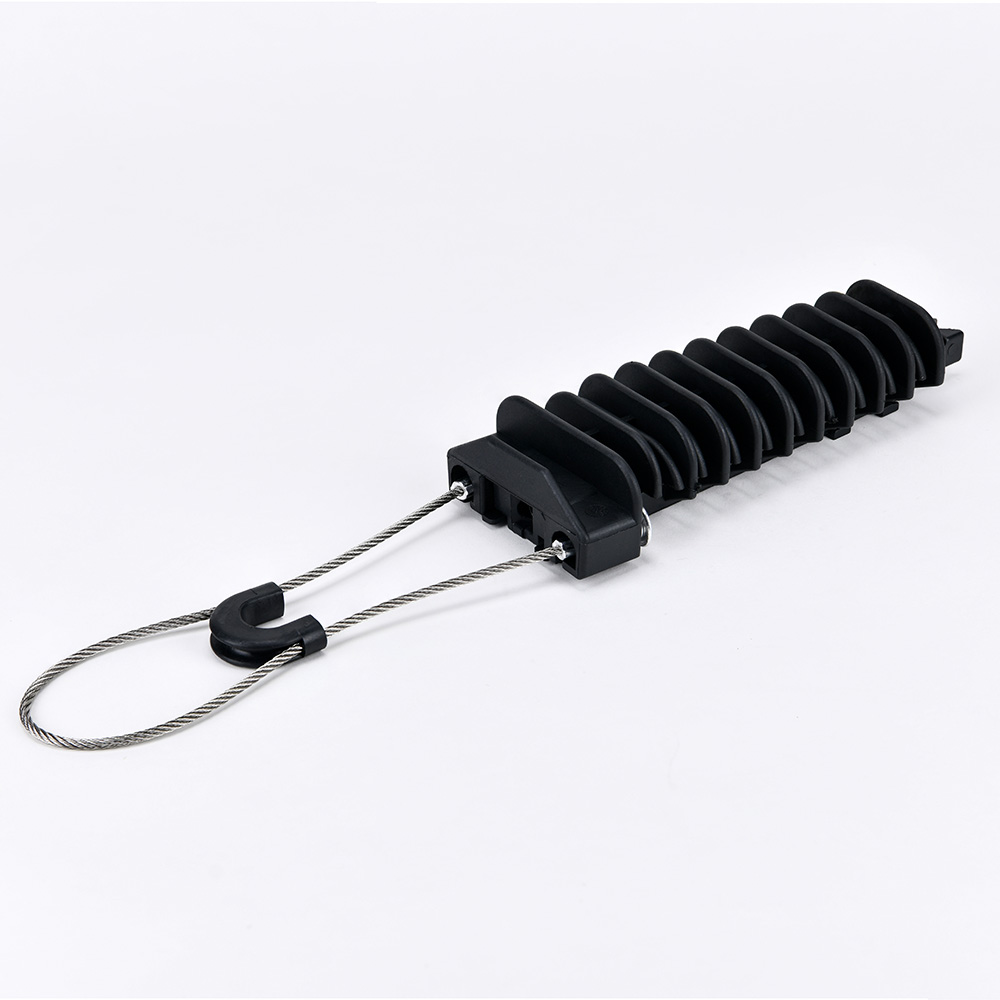
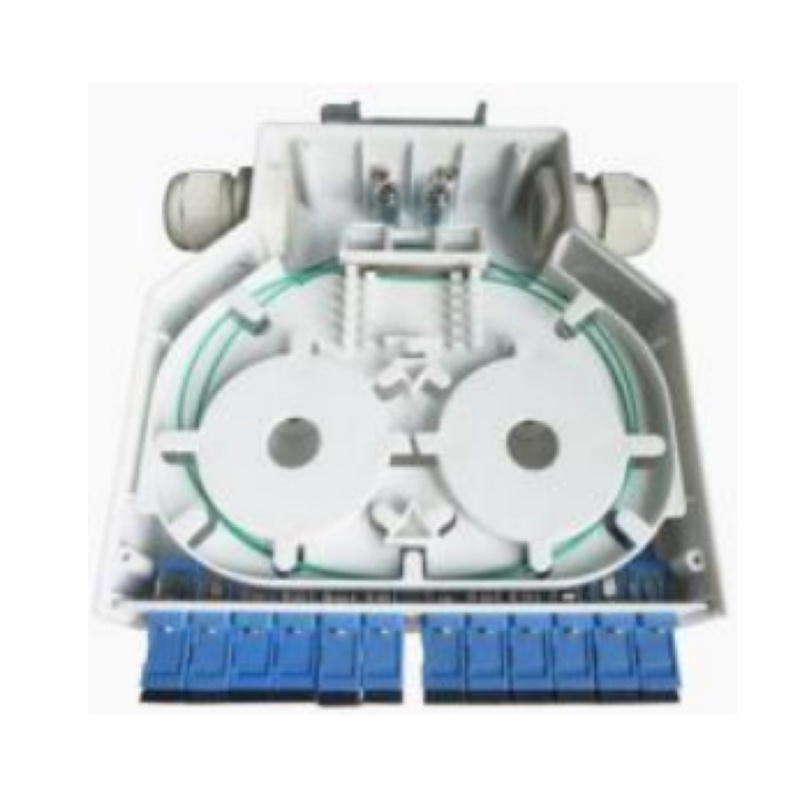
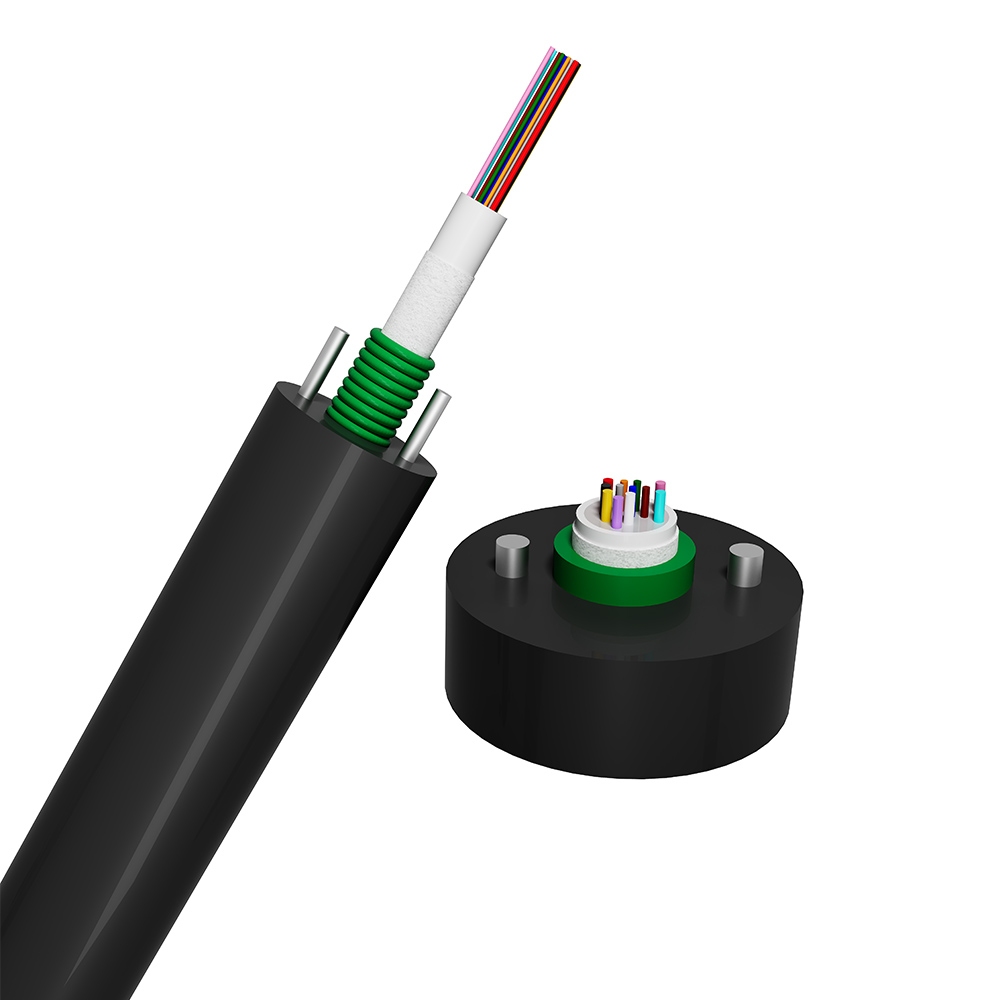
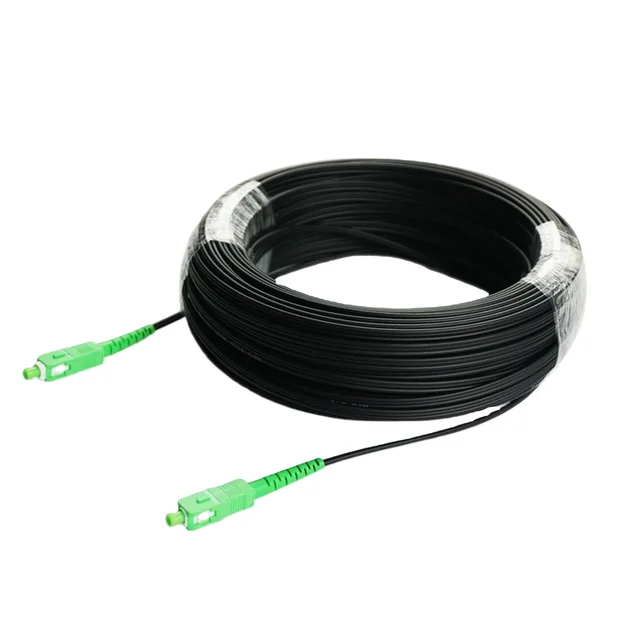
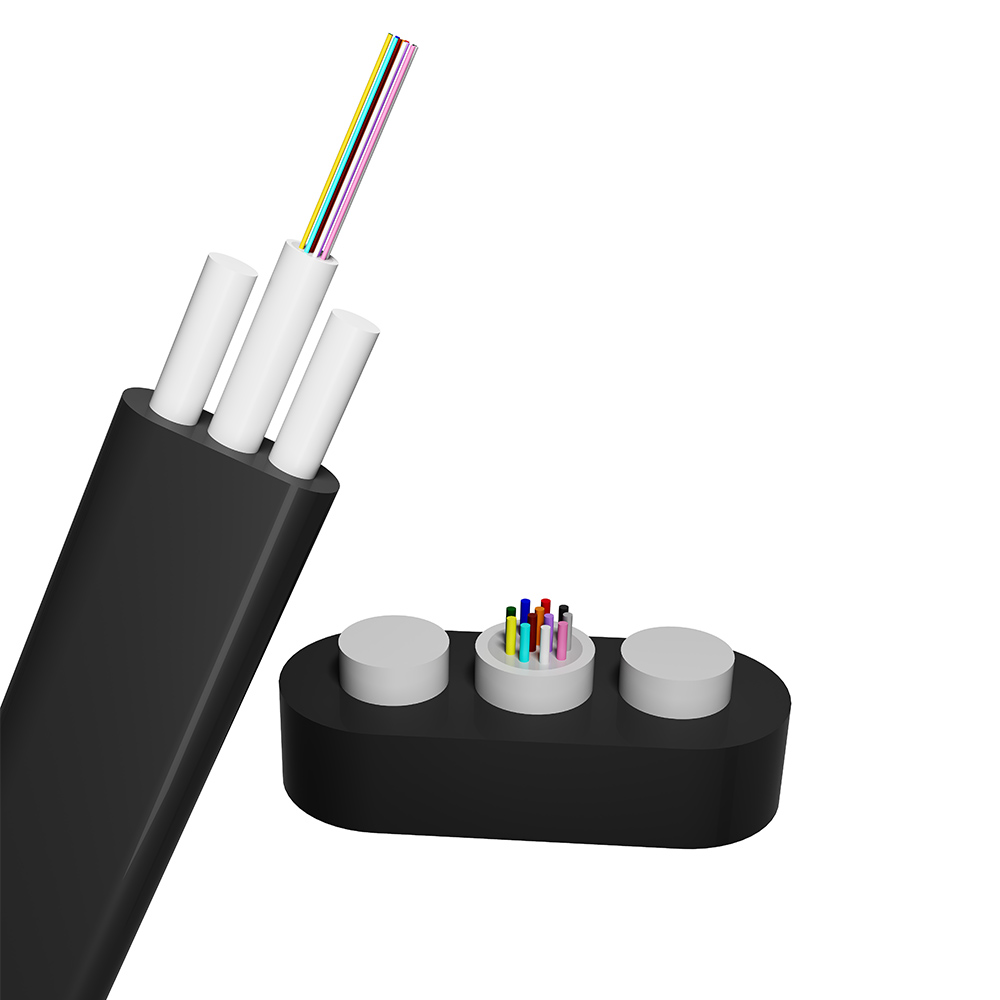
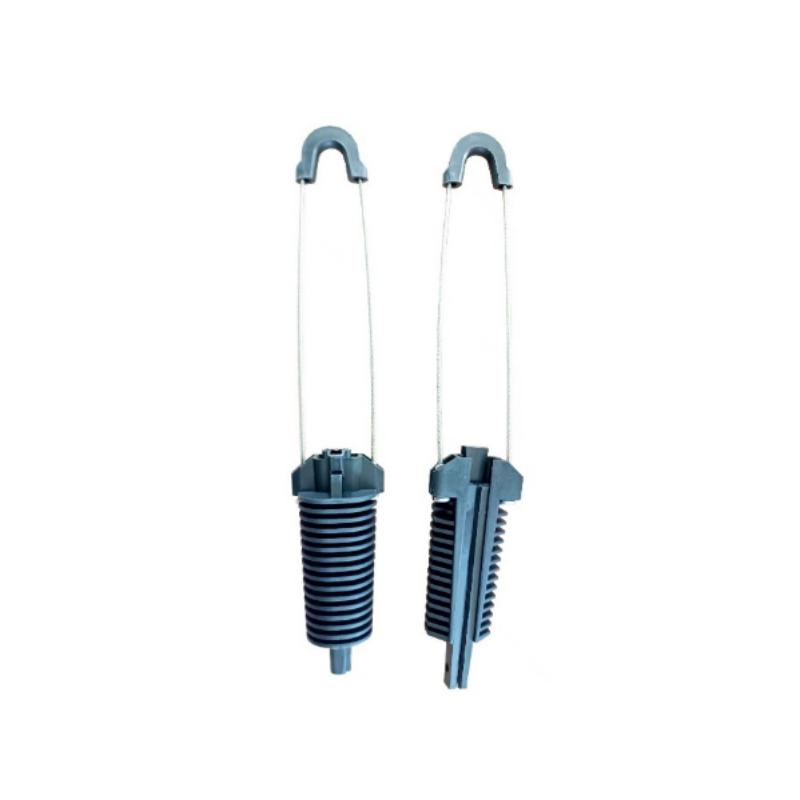
A successful FTTx network deployment requires a holistic approach to component selection. The media converter is only as good as the physical link connecting it. High-quality optical transmission relies on robust overhead and underground fiber cables, such as Central Loose Tube Armored Fiber Optic Cables, secured with heavy-duty hardware like the Anchoring Clamp PA2000. Proper strain relief, termination in distribution boxes like the OYI-DIN-FB Series, and clean connections via FTTH Pre-Connectorized Drop Patchcords ensure that the optical signal arriving at the media converter is clear, minimizing packet loss and maximizing network uptime.
Oyi International ., Ltd.
Oyi international., Ltd. is a dynamic and innovative fibre optic cable company based in Shenzhen, China. Since its inception in 2006, OYI has been dedicated to providing world-class fibre optic products and solutions to businesses and individuals across the globe. Our Technology R&D department has more than 20 specialized staff committed to developing innovative technologies and providing high-quality products and services. We export our products to 143 countries and have established long-term partnerships with 268 clients.
Our products are widely used in telecommunications, data center, CATV, industrial and other areas. Our main products include various types of optical fiber cables, fiber optic linkers, fiber distribution series, fiber optic connectors, fiber optic adapters, fiber optic couplers, fiber optic attenuators, and WDM series. Not only that, our products cover ADSS, ASU, Drop Cable, Micro Duct Cable, OPGW, Fast Connector, PLC Splitter, Closure, FTTH Box, etc. In addition, we provide our customers with complete fiber optic solutions, such as Fiber to the Home (FTTH), Optical Network Units (ONUs), and High Voltage Electrical Power Lines. We also provide OEM designs and financial support to help our customers integrate multiple platforms and reduce costs.
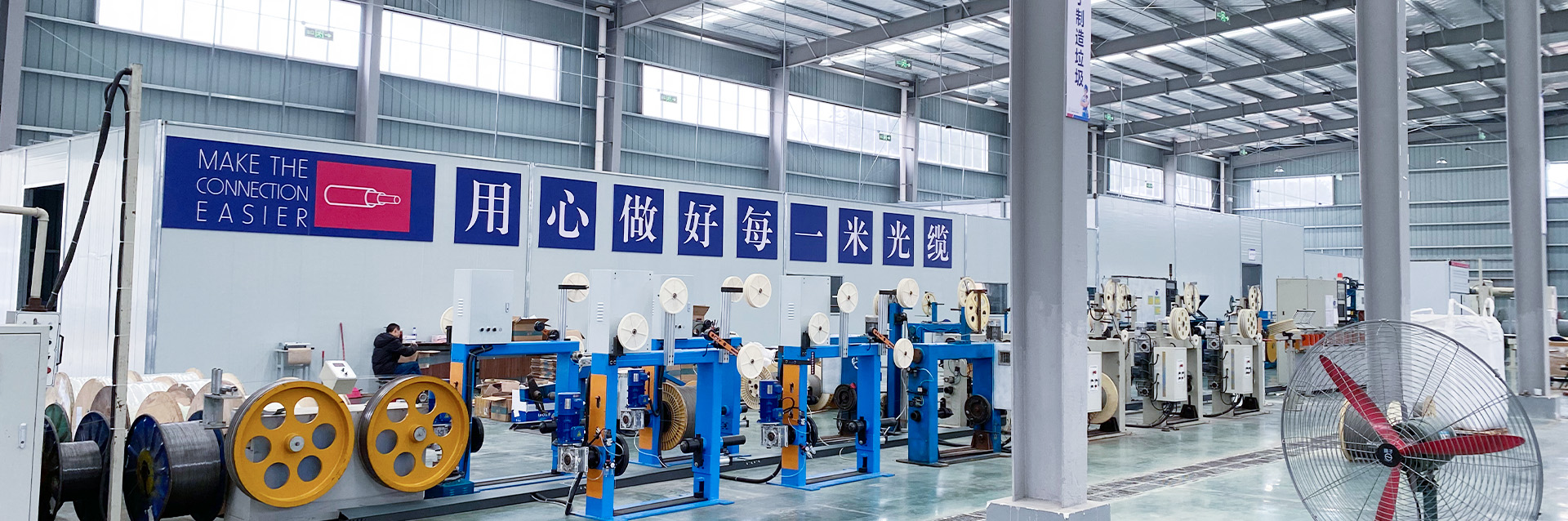
About Oyi Production Facilities


Company Philosophy & Our Factory
We are committed to innovation and excellence. Our team of experts are constantly pushing the boundaries of what’s possible, ensuring that we remain at the forefront of the industry. We invest heavily in research and development to ensure that we are always one step ahead of the competition. Our cutting-edge technology allows us to produce fibre optic cables that are not only faster and more reliable, but also more durable and cost-effective.
Our advanced manufacturing process ensures that our fibre optic cables are of the highest quality, guaranteeing lightning-fast speeds and reliable connectivity. Our commitment to excellence means that our customers can always rely on us to provide them with the best possible solutions.
If you’re looking for a reliable, high-speed fibre optic cable solution, look no further than OYI. Contact us now to see how we can help you stay connected and take your business to the next level.
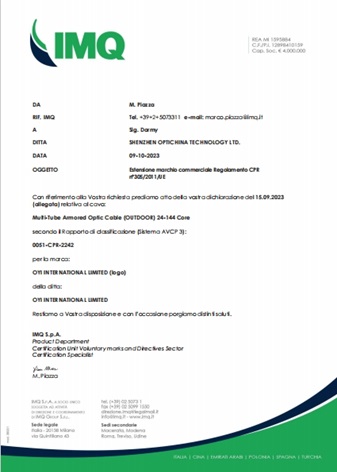
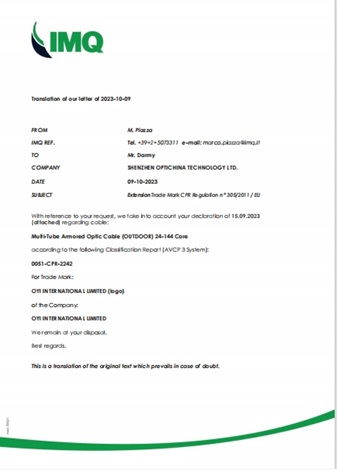
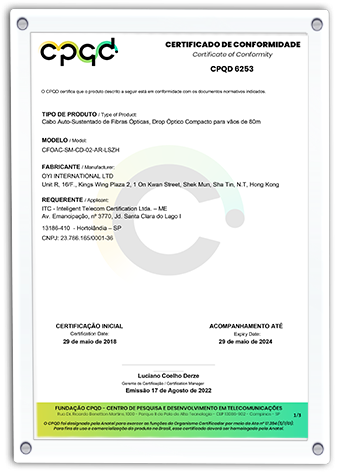
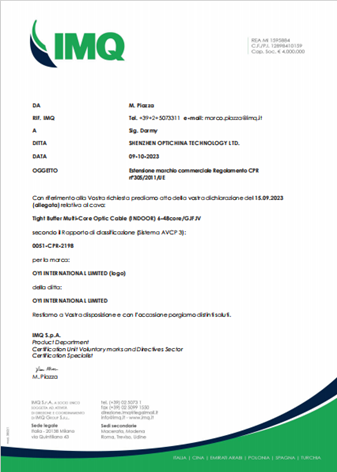
The Company has Obtained Certification
Our production conforms to rigorous international standards, ensuring safe and premium performance.


Our Complete FTTx Product Catalog
Explore our full range of high-performance fiber optic cables, distribution systems, and anchoring components.