 0755-23179541
  sales@oyii.net
.png) 8618926041961
8618926041961Featured LAN Connection Products
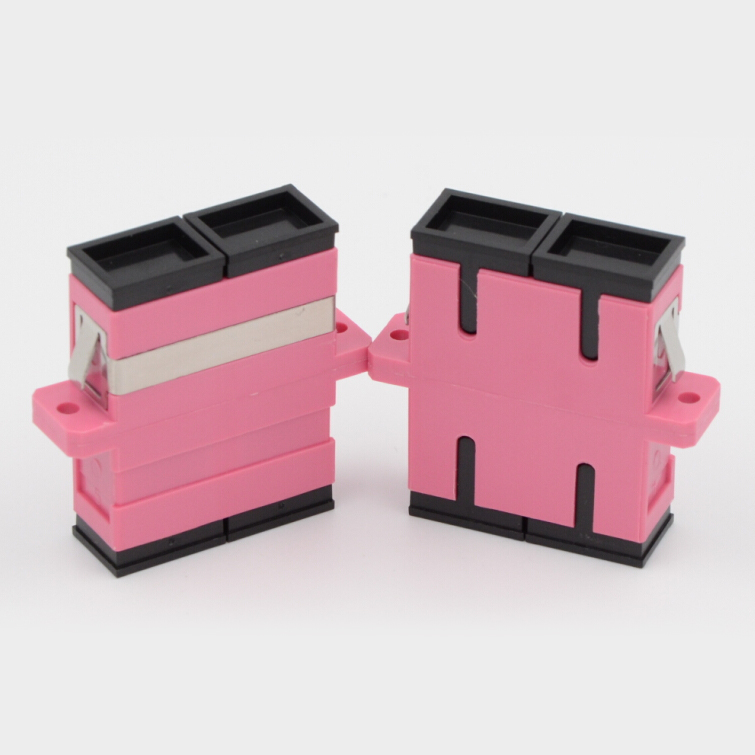
The Critical Role of Indoor Cable in Local Area Network Optical Transceiver Connections
In today's hyper-connected enterprise environment, Local Area Networks (LANs) serve as the central nervous system of business operations. As data demands skyrocket due to cloud computing, big data analytics, and real-time collaboration tools, copper-based cabling infrastructure is rapidly reaching its physical limitations. Modern LAN architectures rely heavily on fiber optic transceivers to convert electrical signals to optical signals, allowing high-speed data transmission over longer distances with minimal attenuation.
To ensure optimal performance, the physical connection between these transceivers—typically housed in switches, routers, and servers—must be established using specialized indoor fiber optic cables. These cables are engineered to navigate the tight pathways, risers, and plenums of commercial buildings while maintaining strict transmission integrity.
Commercial and Industrial Landscape
The global market for indoor fiber optic cables is experiencing exponential growth, driven by the massive migration of enterprises to hybrid cloud environments and the deployment of private 5G networks. In industrial settings, the rise of Industry 4.0, smart manufacturing, and IoT has created a demand for high-capacity LAN networks that can operate reliably in harsh environments. Indoor cables must now feature robust jacketing materials, such as Low Smoke Zero Halogen (LSZH) and Plenum-rated compounds, to meet strict building safety codes while resisting electromagnetic interference (EMI) commonly found on factory floors.
Oyi international ., Ltd.
Oyi international., Ltd. is a dynamic and innovative fibre optic cable company based in Shenzhen, China. Since its inception in 2006, OYI has been dedicated to providing world-class fibre optic products and solutions to businesses and individuals across the globe. Our Technology R&D department has more than 20 specialized staff committed to developing innovative technologies and providing high-quality products and services. We export our products to 143 countries and have established long-term partnerships with 268 clients.
Our products are widely used in telecommunications, data center, CATV, industrial and other areas. Our main products include various types of optical fiber cables, fiber optic linkers, fiber distribution series, fiber optic connectors, fiber optic adapters, fiber optic couplers, fiber optic attenuators, and WDM series. Not only that, our products cover ADSS, ASU, Drop Cable, Micro Duct Cable, OPGW, Fast Connector, PLC Splitter, Closure, FTTH Box, etc. In addition, we provide our customers with complete fiber optic solutions, such as Fiber to the Home (FTTH), Optical Network Units (ONUs), and High Voltage Electrical Power Lines. We also provide OEM designs and financial support to help our customers integrate multiple platforms and reduce costs.
- 20+ Years in The Industry Sector
- 20+ Technical R&D Personnel
- 143 Exporting Countries
- 268 Cooperative Clients
Key Technological Trends in Indoor LAN Cabling
As local area networks transition from 10G to 40G, 100G, and even 400G ethernet architectures, several key technological shifts are shaping the design and manufacturing of indoor fiber optic cables:
1. Transition to Multimode OM4 and OM5 Fibers
For short-reach indoor applications within enterprise server rooms and data centers, Multimode Fiber (MMF) remains the dominant choice due to the lower cost of multimode transceivers (VCSEL-based). OM4 and the newer OM5 (Wideband Multimode) fibers are optimized for Shortwavelength Division Multiplexing (SWDM), allowing multiple wavelengths to be transmitted over a single fiber pair, vastly increasing bandwidth capacity without increasing cable bulk.
2. Bend-Insensitive Fiber (BIF) Technology
In tight indoor environments, cables are often routed around sharp corners and within cramped patch panels. Standard optical fibers suffer high attenuation when bent. Modern indoor cables utilize bend-insensitive single-mode (G.657.A1/A2) and multimode fibers, which minimize signal loss under tight bending configurations, ensuring the integrity of connections to optical transceivers.
3. High-Density Cabling & MPO/MTP Connectors
As the number of connections in the main distribution area increases, traditional simplex or duplex patch cables become unmanageable. High-density indoor trunk cables terminated with MPO/MTP connectors allow up to 12, 24, or even 72 fibers to be connected to a single transceiver interface, simplifying cable management and optimizing airflow.
About Oyi - Production & Facilities


Deep Application Scenario Analysis
Indoor cables are used in a variety of topologies to link optical transceivers. Below, we analyze three primary scenarios where high-quality cabling determines network reliability.
Scenario A: Enterprise Data Center Interconnects (DCI)
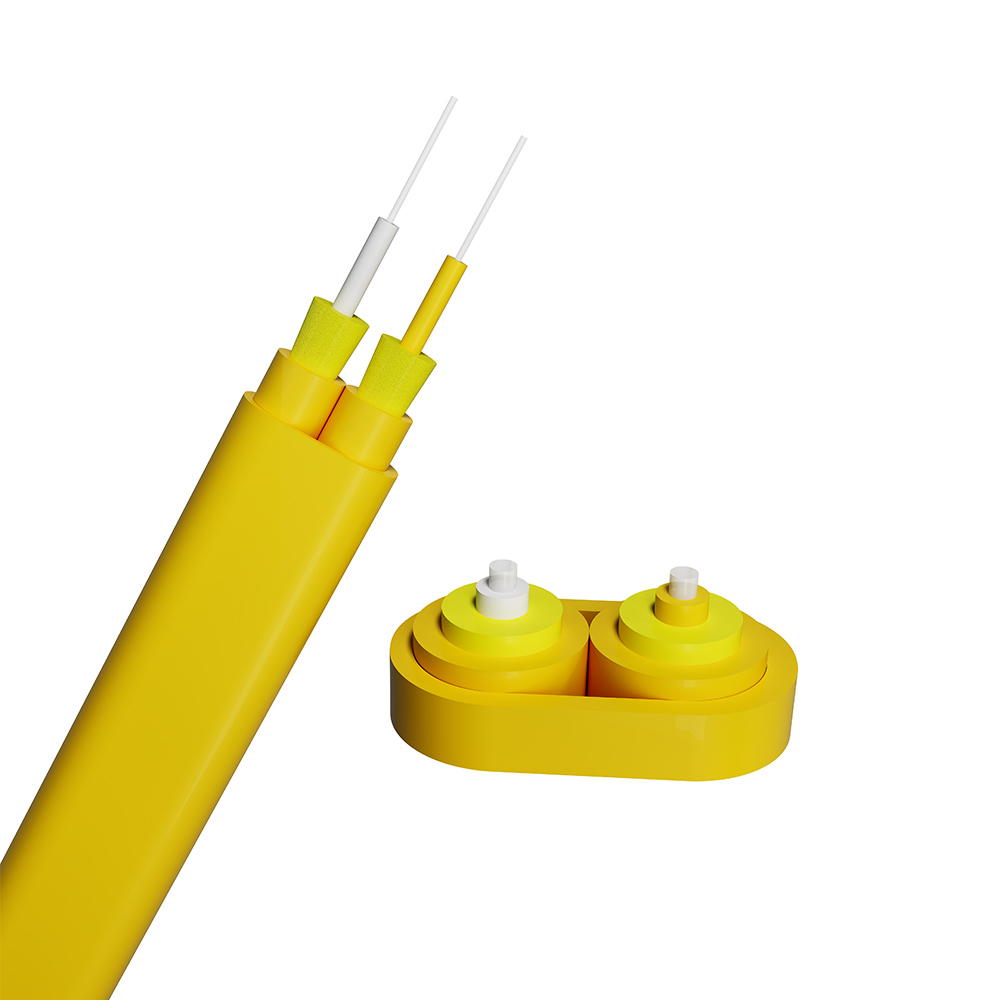
Within modern enterprise data centers, servers are housed in high-density racks. The connection between Top-of-Rack (ToR) switches and core distribution switches requires ultra-high bandwidth. Here, Flat Twin Fiber Cables (GJFJBV) are widely used as patch cords to connect transceivers directly. The flat structure provides excellent mechanical protection and prevents tangling, while the tight-buffered fiber design ensures low signal attenuation even under continuous operation.
Scenario B: Campus Core to Building Distribution
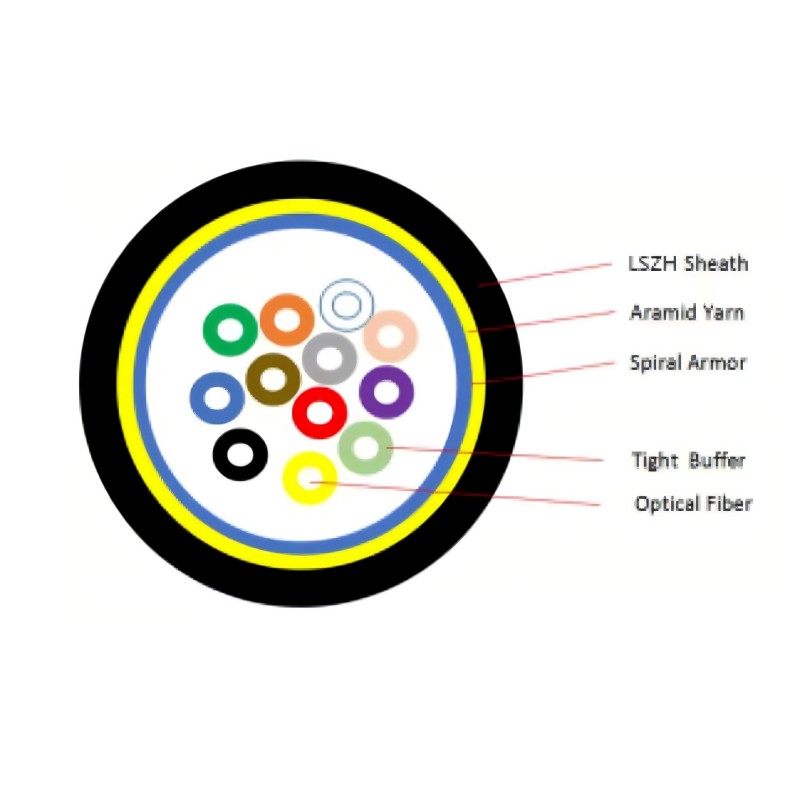
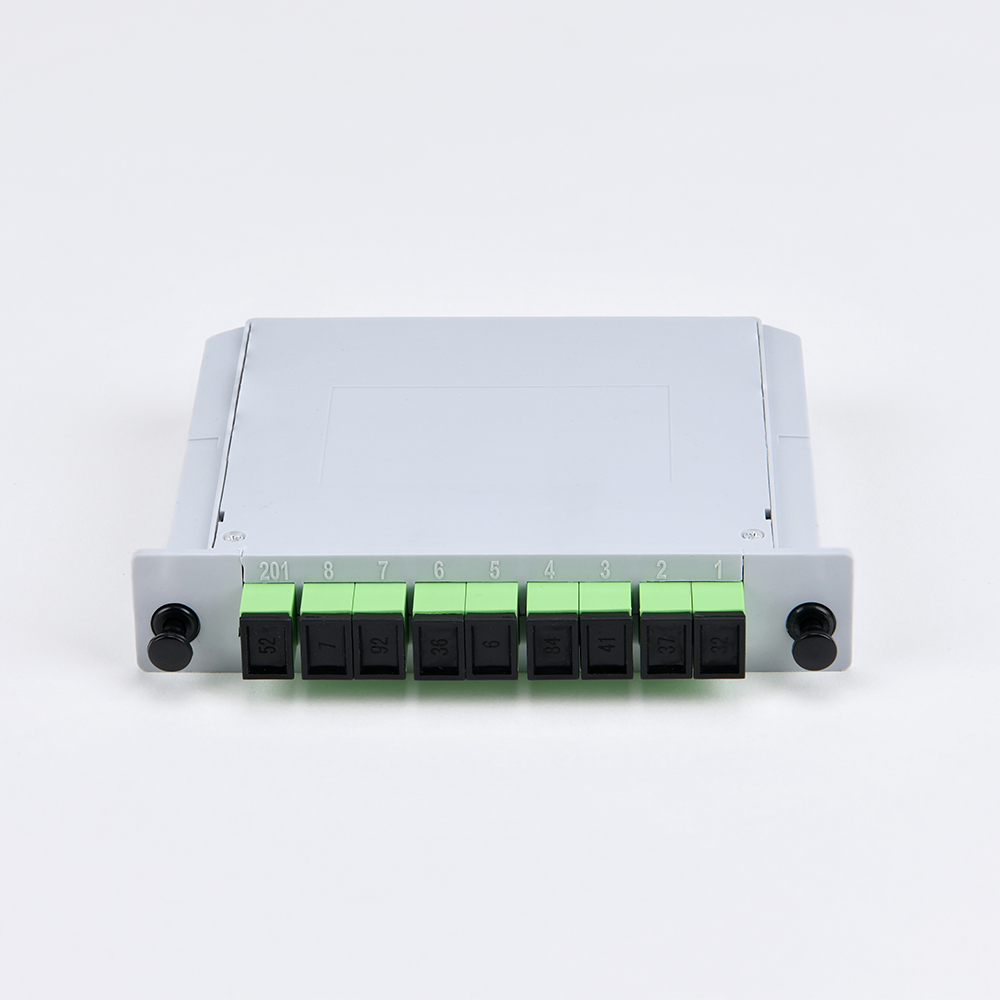
In multi-building campus environments, indoor-outdoor transition points require specialized cabling. Inside the building, the fiber routing must comply with strict fire safety regulations. Cables like the GJFJKH, which feature LSZH jackets, are routed through vertical risers to connect floor-level distribution frames. These distribution frames house PLC splitters and terminal boxes, which then feed signals to individual optical transceivers in departmental switches.
Scenario C: Fiber-to-the-Desk (FTTD) in Modern Offices
To support bandwidth-intensive applications such as 8K video conferencing and real-time cloud editing, many organizations are deploying FTTD architectures. Fiber is brought directly to the workstation, terminating at a compact wall-mounted optical outlet. A short, flexible fiber jumper then connects the outlet to the optical transceiver in the user's workstation or VoIP phone, providing unparalleled speeds and immunity to local electrical interference.
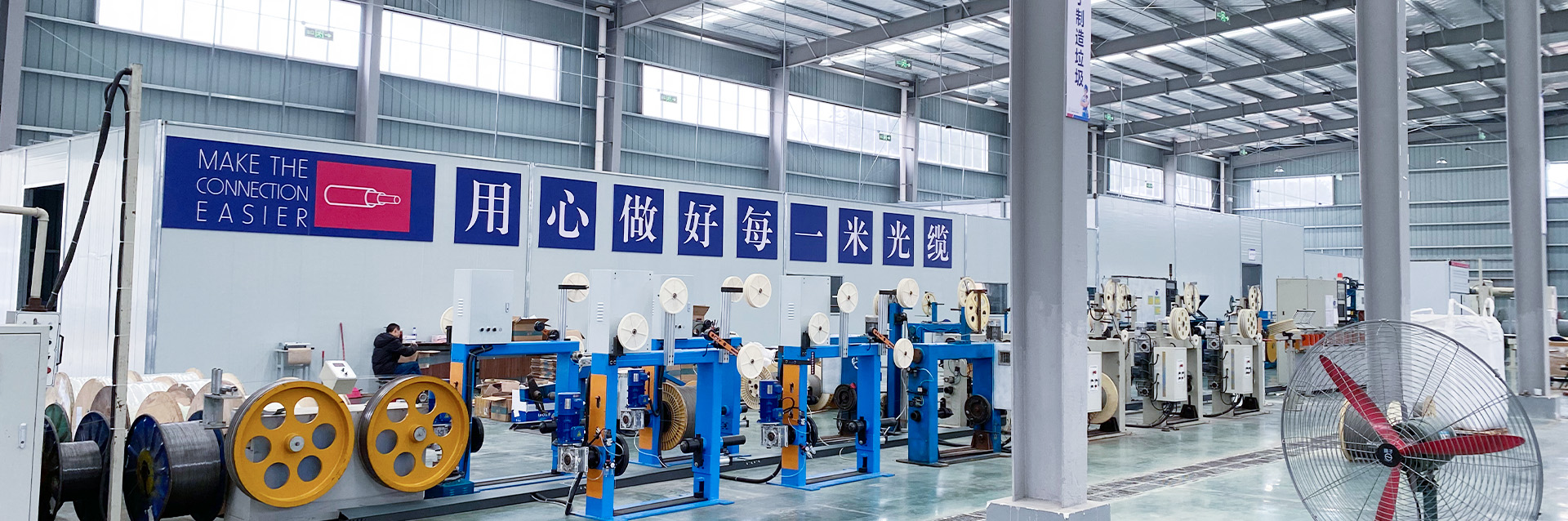
Company Philosophy & Our Factory
We are committed to innovation and excellence. Our team of experts are constantly pushing the boundaries of what’s possible, ensuring that we remain at the forefront of the industry. We invest heavily in research and development to ensure that we are always one step ahead of the competition. Our cutting-edge technology allows us to produce fibre optic cables that are not only faster and more reliable, but also more durable and cost-effective.
Our advanced manufacturing process ensures that our fibre optic cables are of the highest quality, guaranteeing lightning-fast speeds and reliable connectivity. Our commitment to excellence means that our customers can always rely on us to provide them with the best possible solutions.
If you’re looking for a reliable, high-speed fibre optic cable solution, look no further than OYI. Contact us now to see how we can help you stay connected and take your business to the next level.
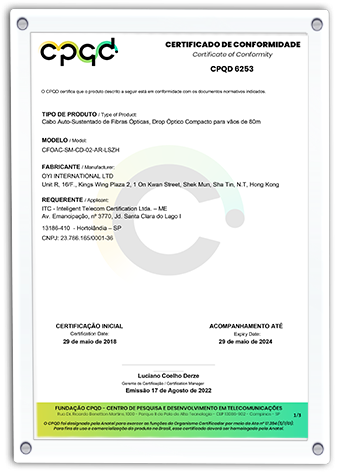
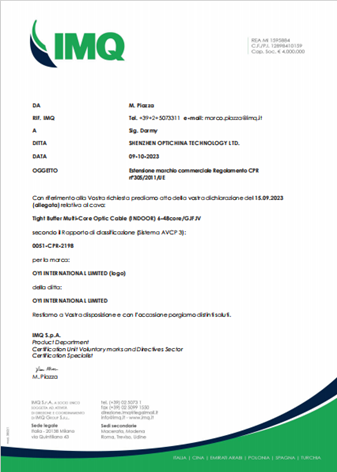
The Company has Obtained Certification
OYI adheres to strict international quality standards, ensuring our products meet global requirements for safety, performance, and environmental protection.




Installation & Maintenance Best Practices for Optical Transceiver Connections
Even the highest quality indoor cable can underperform if installed or maintained incorrectly. To ensure maximum uptime and performance for local area network optical transceiver connections, network engineers should follow these standards:
1. Maintain Proper Bend Radius
Over-bending fiber optic cables causes macro-bending loss, which directly impacts the light signal. During installation, always adhere to the manufacturer's specified minimum bend radius (typically 20 times the cable diameter during installation, and 10 times after tension is released).
2. Inspect and Clean Connector End-Faces
The leading cause of optical transceiver failures is contaminated fiber connectors. Microscopic dust particles can block light transmission or permanently damage the transceiver lens. Always inspect patch cord end-faces with a fiber microscope and clean them using specialized lint-free clicks before plugging them into the transceiver modules.
3. Avoid Tension and Cable Stress
Indoor cables should never support their own weight over long vertical runs without proper support grips. Tension can stretch the fiber glass inside the jacket, leading to micro-cracks and eventual signal degradation. Utilize cable trays, J-hooks, and velcro ties (never zip ties, which can pinch the cable) to secure routes.