 0755-23179541
 sales@oyii.net
 8618926041961
Modern Commercial Building Fiber Architecture
Overcoming the physical boundaries between outside plant (OSP) infrastructure and structured indoor cabling
The contemporary enterprise landscape is undergoing a digital revolution characterized by cloud-first computing, widespread deployment of Wi-Fi 6E/7 access points, 4K telepresence rooms, and centralized Building Management Systems (BMS). As commercial real estate transitions toward intelligent, connected ecosystems, multi-story office buildings demand backbone communications capable of multi-terabit throughput. A critical bottleneck in traditional optical design has been the point of demarcation between outdoor long-haul fiber cables and the internal structured distribution paths. Deploying high-performance outdoor optical cables that conform to strict indoor vertical fire regulations has emerged as the definitive engineering paradigm for top-tier multi-tenant office complexes.
Seamless Demarcation
Eliminate failure-prone external-to-internal transition splices by utilizing universal indoor/outdoor dual-rated cables that extend directly to tenant distribution closets.
Harsh Environment Armor
Water-blocked, rodent-resistant, and UV-stabilized outers protect against duct flooding and mechanical shear while transitioning through underground vaults and exterior vertical runs.
Strict Fire Compliance
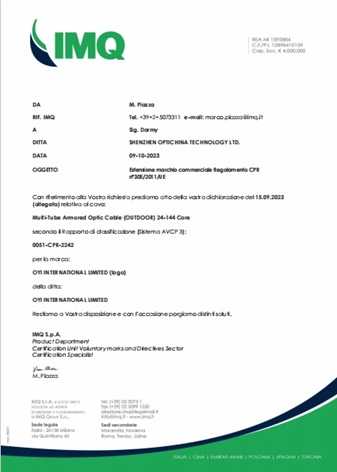
Fully compliant with CPR (Construction Products Regulation), OFNR (Riser), and low-smoke zero-halogen (LSZH) classifications for high-density vertical building shafts.
Current Industrial Realities & Commercial Landscape
Historically, commercial campus network designs mandated a transition point located directly at the Building Entrance Facility (BEF) or inside the basement Entrance Room (ER). Outside Plant (OSP) cables, typically reinforced with heavy polyethylene (PE) jacketing and filled with messy petroleum-based water-blocking gels, were strictly restricted from penetrating buildings beyond 50 feet (roughly 15 meters) according to NFPA and National Electrical Code (NEC) regulations. This required telecommunication engineers to deploy costly outdoor-rated optical splice closures or massive transition cabinets right at the perimeter.
In modern multi-story office developments, this legacy methodology introduces excessive points of signal loss, increases installation labor significantly, and demands valuable commercial square footage. Today's building developers, multi-tenant corporate landlords, and enterprise network architects prefer seamless dual-rated (Indoor/Outdoor) dry-core cables. These modern cables employ swellable super-absorbent yarns instead of gel fillings, combined with flame-retardant UV-resistant LSZH jackets. This engineering permits heavy-duty outdoor feeder cables to enter through underground conduits or aerial catenary spans and continue uninterrupted straight up vertical risers across 30, 50, or 80 stories directly to Floor Distributor (FD) rooms.
Deep Architectural Scenario: The Campus-to-Riser Ecosystem
To fully comprehend the strategic utility of this technology, consider an enterprise office park consisting of multi-building towers. External ductwork often encounters continuous hydrostatic pressure, severe sub-zero freeze-thaw cycles, and electromagnetic interference from building mechanical plants and municipal power conduits. The optical cable must safely transport high-count optical paths—frequently ranging from 144 to 864 cores—across these demanding terrain profiles.
Once the cable sweeps into the primary building perimeter, structural demands invert instantly. The mechanical threat profile shifts from tension and water damage to intense vertical tensile drag, micro-bending induced by vertical riser clamps, and severe life-safety fire performance. The integration of corrugated steel tape or dielectric FRP (Fiber Reinforced Polymer) strength members guarantees that vertical suspension through multiple riser pathways does not compromise individual tight-buffered fibers or loose-tube geometries, eliminating optical attenuation drift across years of operational stress.
Emerging Trends: Smart Buildings, AI Edge, and Optical Density
The convergence of modern technology trends is accelerating the demand for outdoor-to-indoor cabling solutions:
1. Hyperscale Tenant Demands & Pre-Terminated MPO Integration
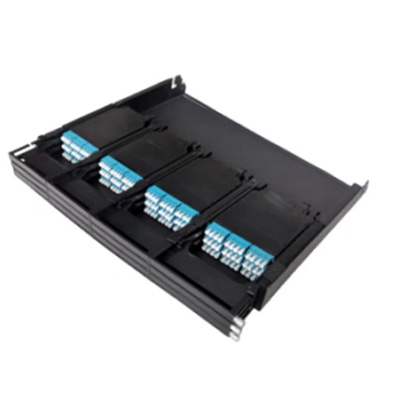
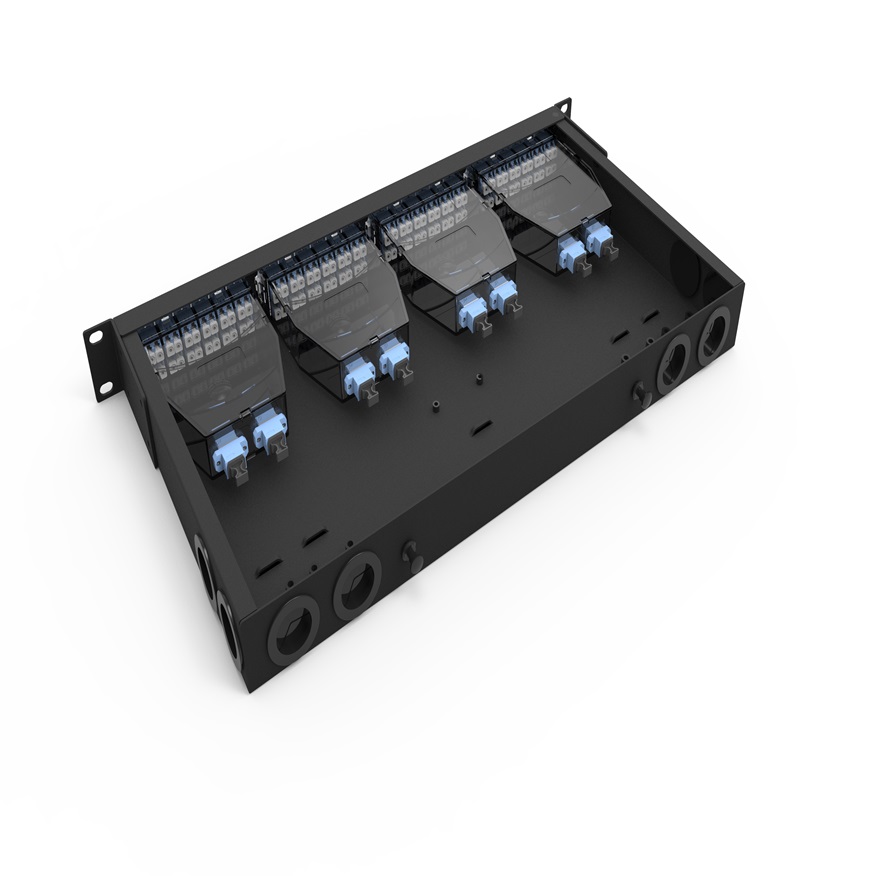
Modern commercial office tenants in banking, artificial intelligence research, and global software engineering routinely deploy private cloud instances and require dedicated, zero-latency dark fiber cross-connects. Backbone trunks must seamlessly merge with high-density MPO/MTP patch systems, such as OYI's modular 144-port optical distribution frames, directly mapping vertical multi-strand trunks to local floor aggregation switches without manual field polishing or splicing.
2. The Convergence of Building IoT and FTTE (Fiber to the Office/Desk)
Traditional Category 6A copper horizontal runs face insurmountable distance limitations (90 meters) when connecting perimeter surveillance arrays, rooftop satellite links, micro-cellular base stations, and peripheral HVAC chillers. Dual-rated outdoor optical cable infrastructure breaks through distance bottlenecks, facilitating direct Fiber-To-The-Edge (FTTE) links from basement command terminals directly to rooftop telecom penthouses and outer architectural facades.
3. Carbon Footprint Reduction and Structural Miniaturization
Multi-duct space inside legacy commercial risers is severely restricted. Miniaturized micro-duct blown fiber cables and ultra-dense ribbon cables provide up to a 60% reduction in outer diameter compared to legacy armored lines. This compactness frees up vertical conduit pathways for redundant telecommunication carriers, boosting building leasing valuation by offering prospective enterprise tenants genuine carrier-neutral diversity.