
 0755-23179541
  sales@oyii.net
.png) 8618926041961
8618926041961Featured Products
High-Performance Link Components
Industry Insight
Understanding Signal Power Attenuation in OPGW Communication Links
In modern electrical power grids and long-distance telecommunication infrastructures, Optical Ground Wire (OPGW) cables serve a crucial dual role. They are suspended at the topmost position of high-voltage transmission towers, acting as standard shield wires to protect the power lines from lightning strikes and short-circuit faults, while simultaneously housing optical fibers that form the backbone of high-capacity optical fiber communication links. However, maintaining high-speed, reliable data transmission over these links requires strict management of signal power attenuation.
Signal power attenuation, measured in decibels per kilometer (dB/km), refers to the reduction in the strength of the light signal as it propagates through the optical fibers inside the OPGW cable. In long-haul transmission links, even minor increases in attenuation can degrade signal quality, leading to data loss, increased latency, and a reduction in overall link capacity. To ensure seamless operation, network engineers must analyze the specific environmental and mechanical stressors that OPGW cables encounter in high-voltage corridors.
Key Mechanisms Behind Attenuation in OPGW Cables
Unlike underground optical cables, OPGW cables are subjected to extreme aerial environments. The primary drivers of attenuation in these installations include:
1. Thermal Fluctuations: High-voltage transmission lines carry massive currents, generating significant heat. The resulting temperature swings cause thermal expansion and contraction of the metallic layers surrounding the optical fibers, leading to microscopic bending (microbending) of the glass fibers.
2. Mechanical Stress & Tension: Wind-induced aeolian vibrations, ice loading, and structural tension over long spans between transmission towers apply mechanical strain to the cable, resulting in macrobending losses.
3. Hydrogen Aging: Electrical currents and moisture can cause hydrogen gas accumulation inside the stainless steel tubes. Over time, hydrogen molecules diffuse into the silica glass, creating absorption peaks that severely attenuate signals in the C-band and L-band spectrums.
Industrial Applications
Commercial & Industrial Landscape of OPGW Technology
The global market for OPGW cables is experiencing substantial growth, driven by the rapid expansion of smart grids, the integration of utility-scale renewable energy projects (such as wind and solar farms), and the increasing demand for high-bandwidth telecommunications. Power utilities worldwide are leveraging their existing right-of-way assets to lease excess fiber capacity (dark fiber) to telecom operators, turning OPGW installations into highly profitable business ventures.
To meet the strict Service Level Agreements (SLAs) required by commercial telecommunication links, utilities must guarantee ultra-low signal attenuation. This has driven a transition from conventional ITU-T G.652.D single-mode fibers to advanced G.654.E fibers, which offer lower attenuation coefficients and larger effective areas. By utilizing low-loss fibers, operators can extend the distance between optical amplifiers, lowering capital expenditure (CAPEX) and operating expenses (OPEX) while ensuring the integrity of high-speed optical links.
In-Depth Scenarios
Real-World Application Scenarios & Mitigation Strategies
Scenario 1: High-Voltage Transmission in Coastal and Corrosive Environments
In coastal regions, OPGW cables are exposed to salt spray, humidity, and industrial pollutants. These factors accelerate galvanic corrosion between dissimilar metals (such as aluminum and steel), which can generate hydrogen gas. The diffusion of hydrogen into the optical fiber core leads to a chemical reaction that increases absorption losses, particularly at the 1383 nm wavelength (the water peak). To mitigate this, modern OPGW designs utilize hermetically sealed stainless steel tubes filled with hydrophobic, thixotropic gel. This gel acts as a chemical barrier, preventing hydrogen ingress and cushioning the fibers against microbending.
Scenario 2: Long-Span River Crossings and Mountainous Terrain
Suspended across deep valleys or wide rivers, OPGW cables must endure high mechanical tension and constant wind load. Under these conditions, the cable undergoes structural elongation. If the optical fibers inside are not protected, they will experience mechanical strain, leading to severe macrobending attenuation. Manufacturers address this by engineering the OPGW with a precise "fiber excess length" (the fiber is slightly longer than the tube containing it). This design ensures that when the outer metal cable stretches under load, the optical fibers remain tension-free and straight, preserving optimal signal power levels.
Scenario 3: Substation Integration and Termination Splicing
At transmission line terminations, the OPGW cable is routed into substations where the fibers are separated and connected to distribution panels (ODFs). Each splice joint, patch panel, and connector introduces potential insertion loss, compounding the total link attenuation. To ensure link reliability, operators must deploy high-precision optical distribution frames, low-insertion-loss fast connectors, and robust splice closures that protect the fragile fiber joints from dust, moisture, and temperature fluctuations.
Manufacturing Excellence
Oyi International ., Ltd.
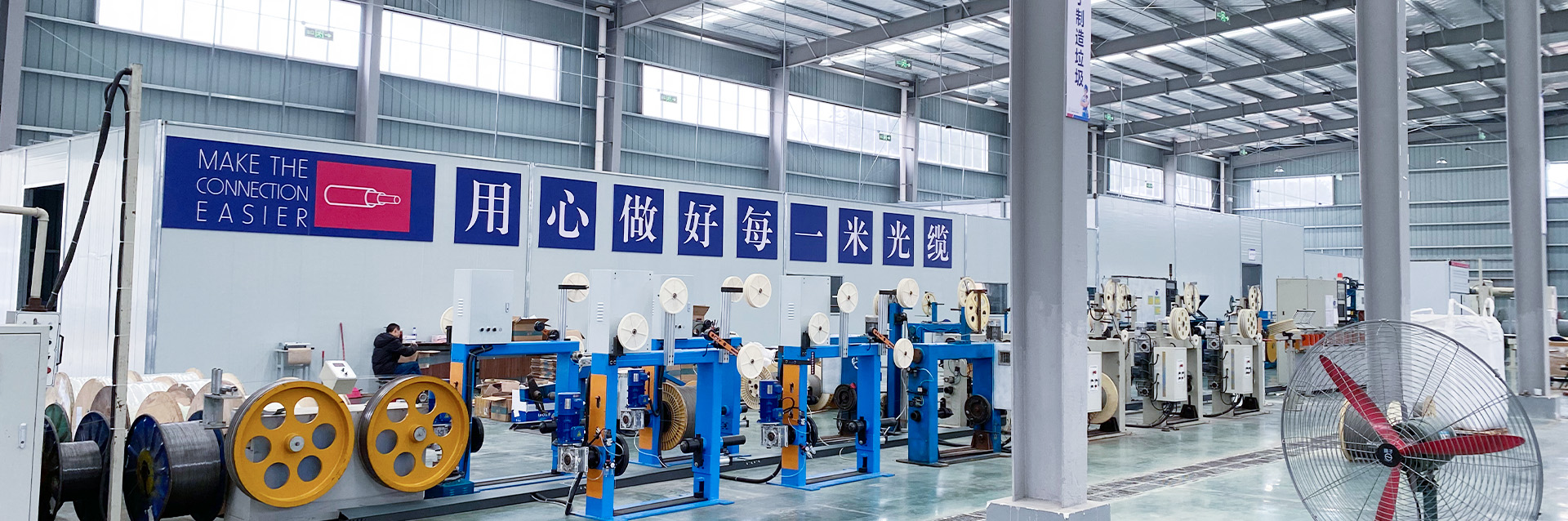
Oyi international., Ltd. is a dynamic and innovative fibre optic cable company based in Shenzhen, China. Since its inception in 2006, OYI has been dedicated to providing world-class fibre optic products and solutions to businesses and individuals across the globe. Our Technology R&D department has more than 20 specialized staff committed to developing innovative technologies and providing high-quality products and services. We export our products to 143 countries and have established long-term partnerships with 268 clients.
Our products are widely used in telecommunications, data center, CATV, industrial and other areas. Our main products include various types of optical fiber cables, fiber optic linkers, fiber distribution series, fiber optic connectors, fiber optic adapters, fiber optic couplers, fiber optic attenuators, and WDM series. Not only that, our products cover ADSS, ASU, Drop Cable, Micro Duct Cable, OPGW, Fast Connector, PLC Splitter, Closure, FTTH Box, etc. In addition, we provide our customers with complete fiber optic solutions, such as Fiber to the Home (FTTH), Optical Network Units (ONUs), and High Voltage Electrical Power Lines. We also provide OEM designs and financial support to help our customers integrate multiple platforms and reduce costs.
About Oyi


Our Philosophy
Our Factory & Quality Assurance
We are committed to innovation and excellence. Our team of experts are constantly pushing the boundaries of what’s possible, ensuring that we remain at the forefront of the industry. We invest heavily in research and development to ensure that we are always one step ahead of the competition. Our cutting-edge technology allows us to produce fibre optic cables that are not only faster and more reliable, but also more durable and cost-effective.
Our advanced manufacturing process ensures that our fibre optic cables are of the highest quality, guaranteeing lightning-fast speeds and reliable connectivity. Our commitment to excellence means that our customers can always rely on us to provide them with the best possible solutions.
If you’re looking for a reliable, high-speed fibre optic cable solution, look no further than OYI. Contact us now to see how we can help you stay connected and take your business to the next level.
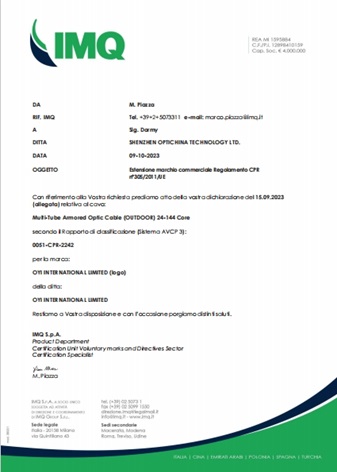
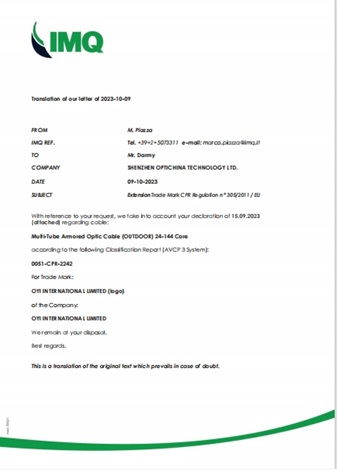
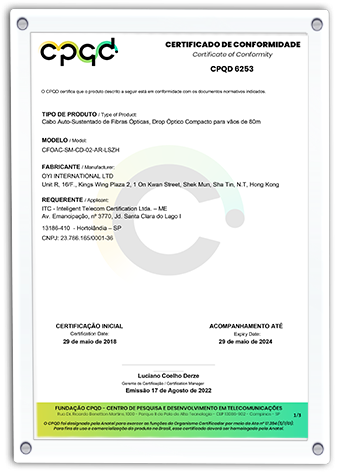
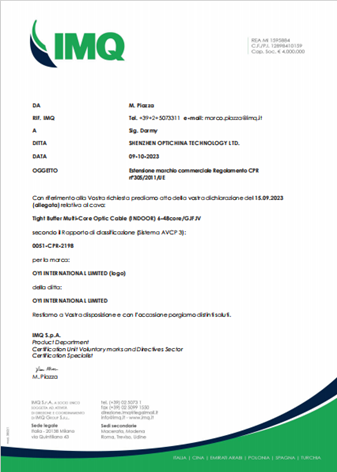
The Company has Obtained Certification


Product Catalog
Explore Our Optical Fiber Solutions
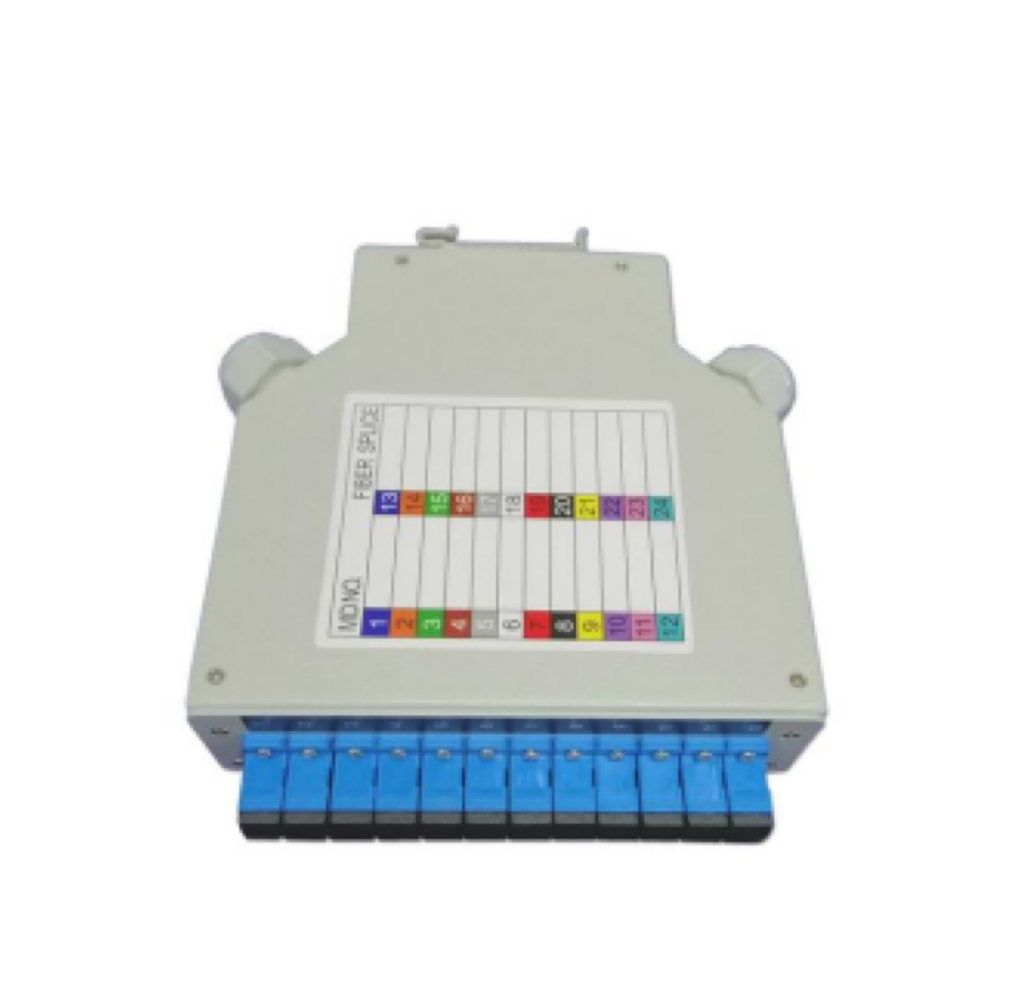 OYI-DIN-00 Series Attenuation Test Terminal
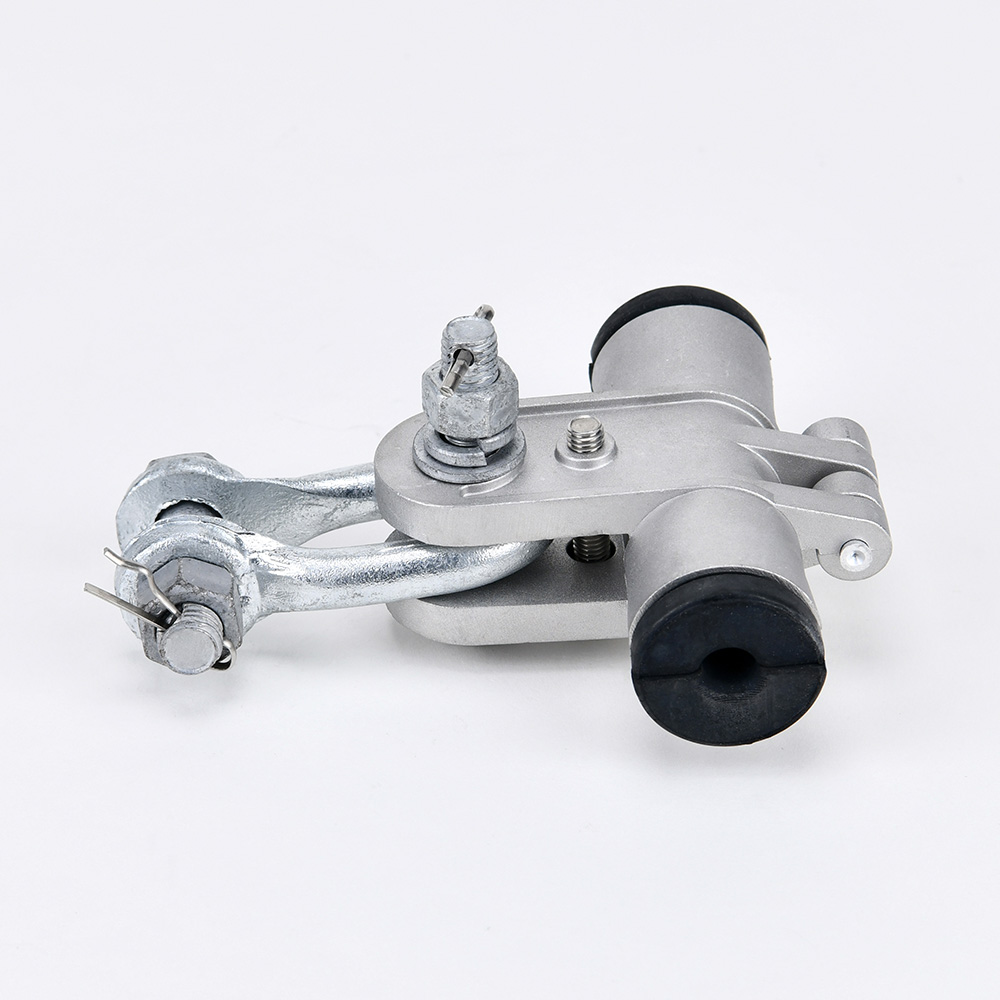 OPGW/ADSS Tension Suspension Clamp Type B
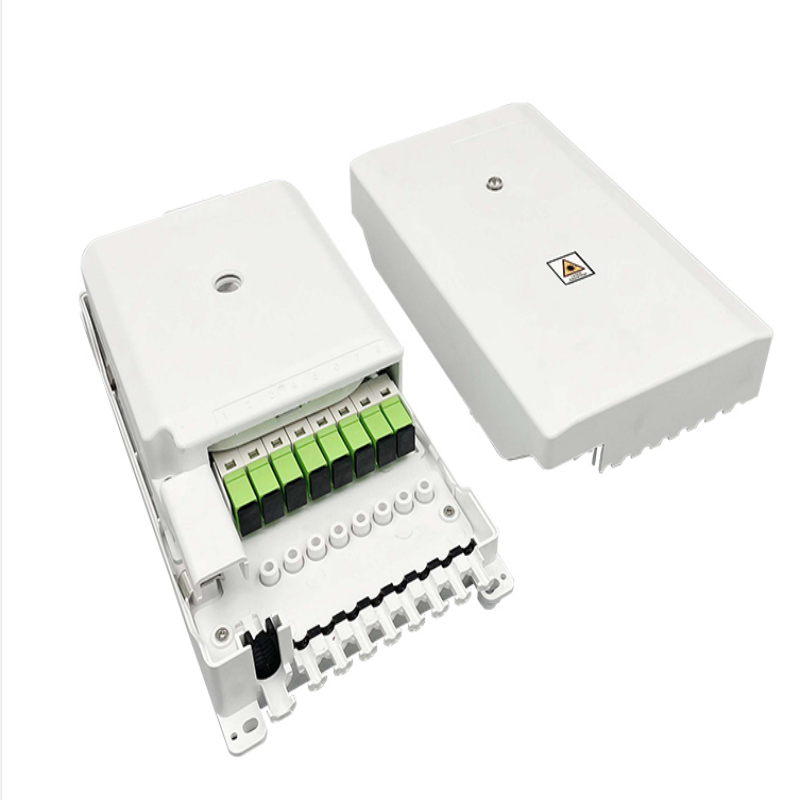 8 Cores OYI-FAT08E Low-Loss Terminal Box
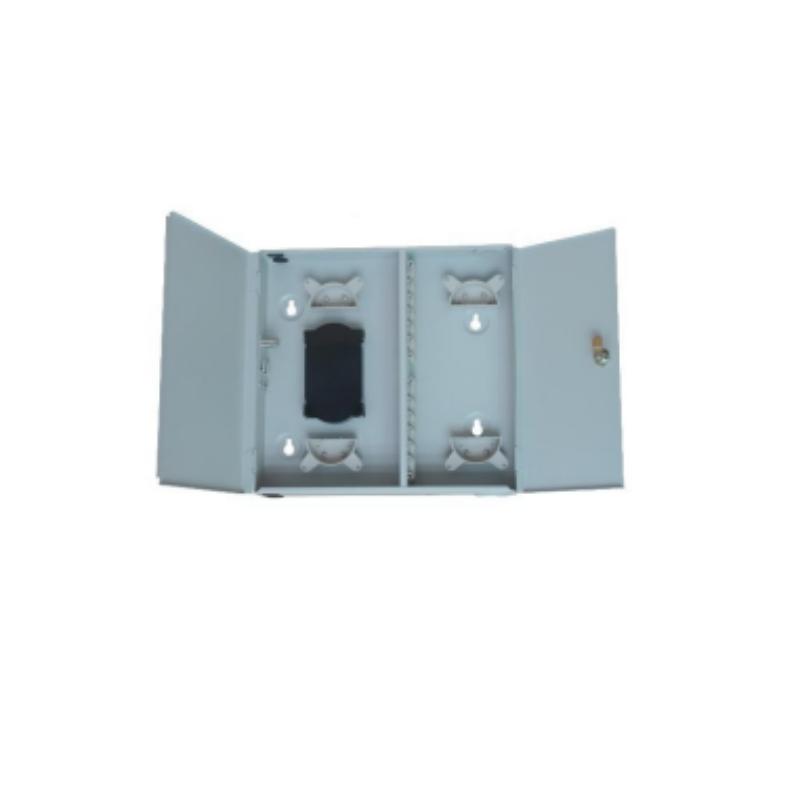 OYI-IW Low-Attenuation Splice Series
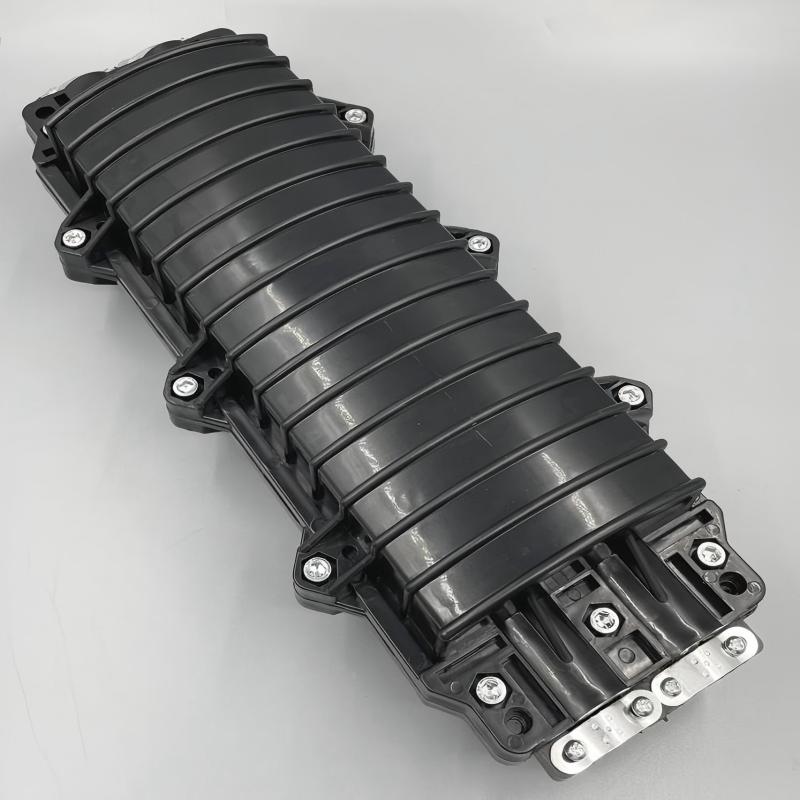 OYI-FOSC-H17 High-Protection Splice Closure
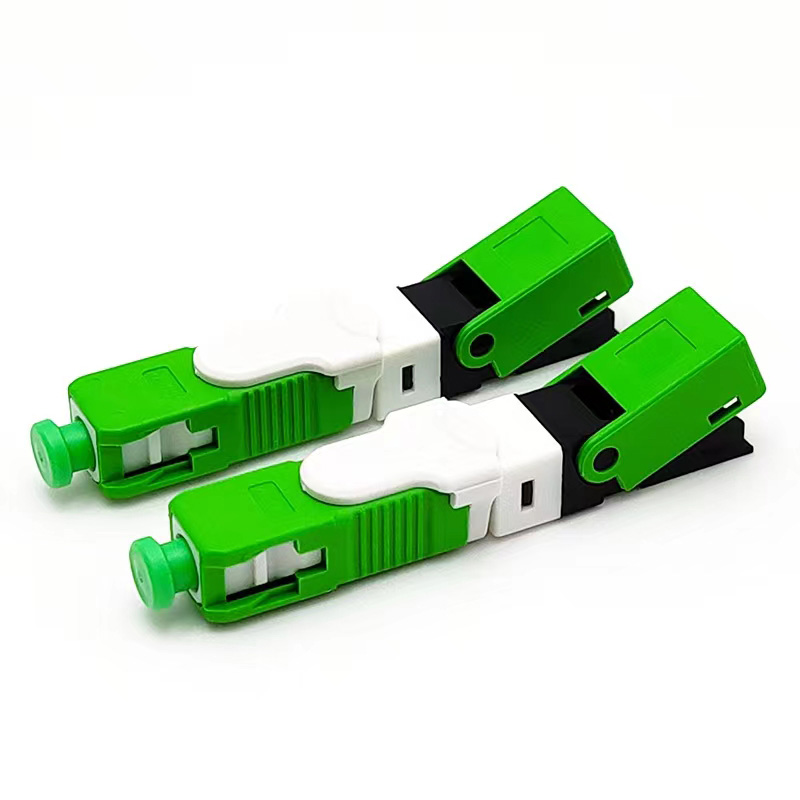 OYI A Type Low-Insertion-Loss Fast Connector
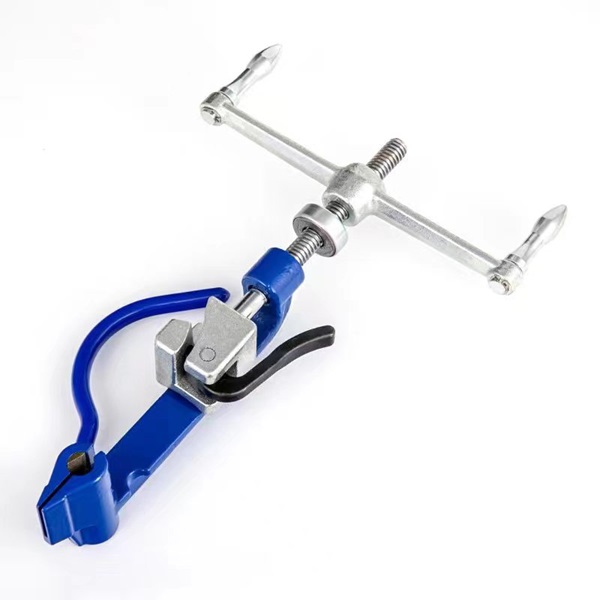 OPGW Stainless Steel Banding & Installation Tools
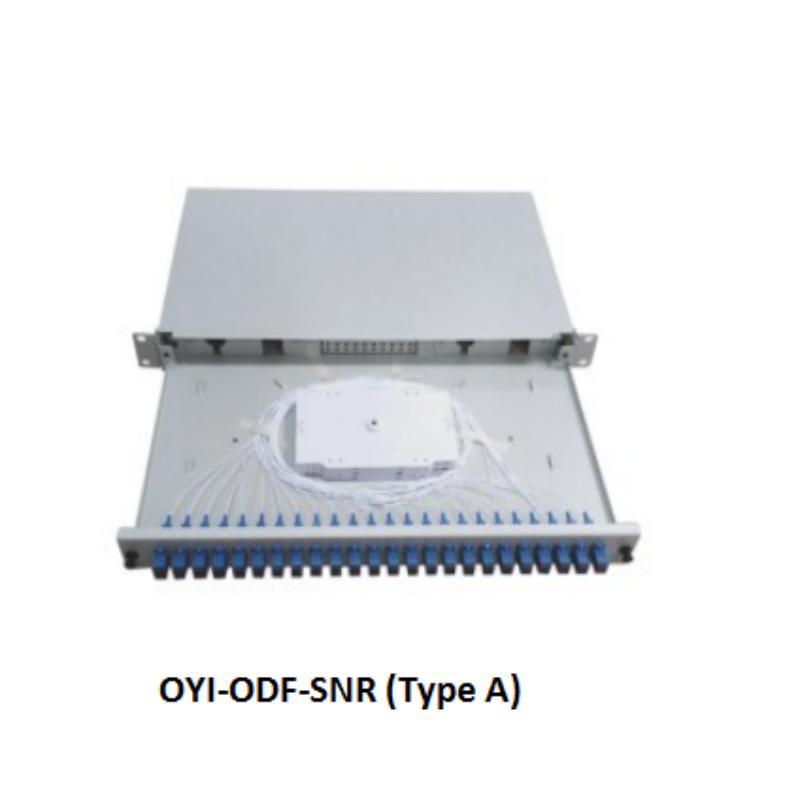 OYI-ODF-SNR-Series High-Density Distribution Panel
