 0755-23179541
  sales@oyii.net
.png) 8618926041961
8618926041961Featured Network Storage Terminal Solutions
1. Industrial Landscape of Centralized Telecommunication Network Cabinets
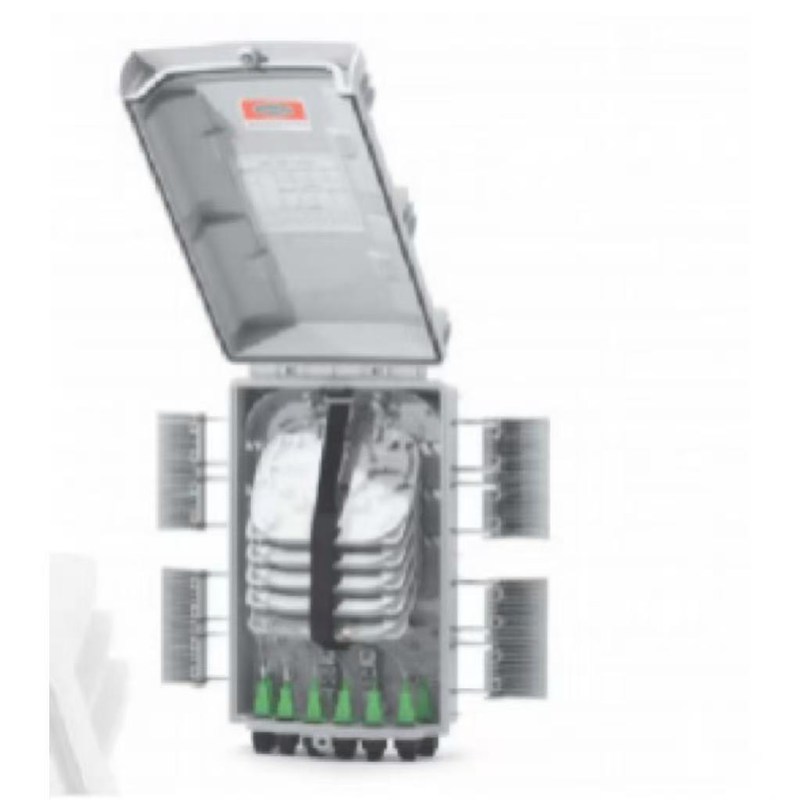
In the rapidly evolving landscape of telecommunications, the consolidation of network infrastructure has become a key operational imperative. Centralized telecommunication network cabinet equipment storage systems act as the core structural blocks of modern metropolitan, enterprise, and edge networks. By aggregating critical components—such as switches, optical distribution frames (ODFs), baseband units (BBUs), and active servers—into centralized cabinets, network operators can significantly reduce physical footprints, minimize power consumption, and streamline maintenance workflows.
As global data traffic continues its exponential growth trajectory, driven by the rollout of 5G networks, cloud computing, artificial intelligence (AI), and Internet of Things (IoT) technologies, the density of fiber optic connections within these storage cabinets has reached unprecedented levels. Traditional single-fiber patching methods, utilizing LC or SC connectors, are no longer viable for high-density configurations due to the physical limitations of space and cable management. Consequently, the industry has experienced a major shift towards multi-fiber push-on (MPO) technology.
Key Takeaway: The Shift to High Density
MPO patchcords allow telecom operators to combine up to 12, 24, or even 72 fibers into a single connector interface. This space-saving design is critical inside centralized telecom cabinets where internal rack space is premium and physical footprint constraints dictate system architecture.
2. Business Value and Operational Efficiency of MPO Patchcords
Implementing MPO patchcord optics within centralized telecom cabinets provides clear financial and operational advantages. In the past, field-terminating hundreds of individual optical fibers required hours of skilled labor, increasing the risk of installation errors, high insertion loss, and project delays. Pre-terminated MPO cable assemblies solve these challenges by offering plug-and-play connectivity that is fully tested in factory-controlled environments.
From a deployment perspective, MPO patchcords can reduce installation times by up to 75% compared to traditional splicing methods. This rapid deployment capability is crucial for telecom operators seeking to accelerate time-to-market for new services. Furthermore, the simplified cable routing enabled by MPO technology reduces the physical volume of cabling within the cabinet. This structural improvement directly enhances airflow pathways, preventing localized hotspots and reducing the energy requirements for active cabinet cooling systems.
3. Structural Challenges and Solutions in Network Equipment Storage
Centralized network cabinets are highly dense environments where active and passive hardware coexist. Within these enclosures, managing the physical routing of patch cords is a critical challenge. Standard 19-inch racks house complex arrays of equipment, and routing bulky cables can block ventilation pathways, leading to thermal stress and component degradation.
MPO patchcords address these challenges through their thin, flexible outer jackets and multi-fiber construction. By replacing multiple individual patch cables with a single high-capacity MPO trunk, network engineers can optimize the routing paths inside the cabinet. This reduction in cable bulk prevents "cable dams" from forming at the sides and rear of the rack, ensuring that exhaust fans can operate efficiently.
Additionally, polarity management is a critical factor in multi-fiber optical systems. To ensure that the transmitter at one end of the network matches the receiver at the opposite end, MPO systems utilize three distinct polarity methods: Type A (straight-through), Type B (crossover), and Type C (flipped pairs). Selecting the correct polarity configuration is essential for maintaining signal integrity across complex, centralized distribution paths. High-quality MPO patchcords are designed with clear markings and keying options to simplify configuration and prevent installation errors.
Polarity and Alignment Precision
Precise physical alignment is maintained through high-tolerance guide pins on male connectors and alignment holes on female connectors. This mechanical design ensures that insertion loss is minimized across all fiber channels, preserving optical performance in high-speed networks.
4. Deep Dive into Key Application Scenarios
The versatility of MPO patchcord optics makes them suitable for a wide range of high-performance environments within centralized telecom network cabinets:
A. 5G C-RAN Front-haul Hubs
In 5G Centralized Radio Access Network (C-RAN) architectures, baseband processing is consolidated into centralized BBU pools. These hubs are connected to remote radio heads (RRHs) distributed across cell sites. MPO patchcords act as the critical interconnect between the high-capacity outdoor trunk cables and the active BBU equipment, facilitating low-latency, high-bandwidth data transmission over long distances.
B. Data Center Interconnect (DCI) Cabinets
Modern data centers require high-speed optical links to connect adjacent server halls and regional facilities. MPO patchcords provide the high-density pathways needed to link spine and leaf switches. By interfacing directly with high-speed transceivers (such as QSFP28, QSFP-DD, and OSFP), MPO assemblies support data rates of 100G, 400G, and 800G, ensuring that the network core remains bottleneck-free.
C. Enterprise Core Switching Rooms
For large enterprise networks and financial institutions, network downtime is not an option. Centralized equipment rooms rely on MPO patchcords to establish redundant, high-speed backbone connections between core switches. The compact footprint of MPO connectors allows network administrators to pack more fiber ports into a single rack unit (RU), providing a scalable foundation for future expansions.
5. Future Technological Trends in Optical Cabinet Storage
As the telecommunications industry looks toward 800G and 1.6T transmission speeds, optical connectivity technology continues to innovate. One major trend is the development of ultra-low loss (ULL) MPO connectors. By utilizing advanced manufacturing techniques and precision-polished ferrules, ULL connectors achieve insertion losses as low as 0.25dB, allowing network designers to deploy longer links with more connection points.
Another key trend is the transition from standard MPO-12 configurations to MPO-16 and MPO-24 designs. These higher-density connector types align with the requirements of next-generation parallel optics transceivers, enabling more efficient utilization of fiber arrays. Furthermore, the integration of bend-insensitive fibers (such as G.657.A2) ensures that patchcords can maintain optical performance even when routed through tight corners and compact cable trays inside centralized storage cabinets.
Finally, the rise of Co-Packaged Optics (CPO) and silicon photonics is expected to reshape cabinet architectures. By bringing optical interfaces closer to the active silicon chips, CPO technology will demand even higher density at the cabinet patch panel interface. MPO patchcords will continue to serve as the critical link between these active optical engines and the wider network infrastructure.
Oyi International., Ltd.
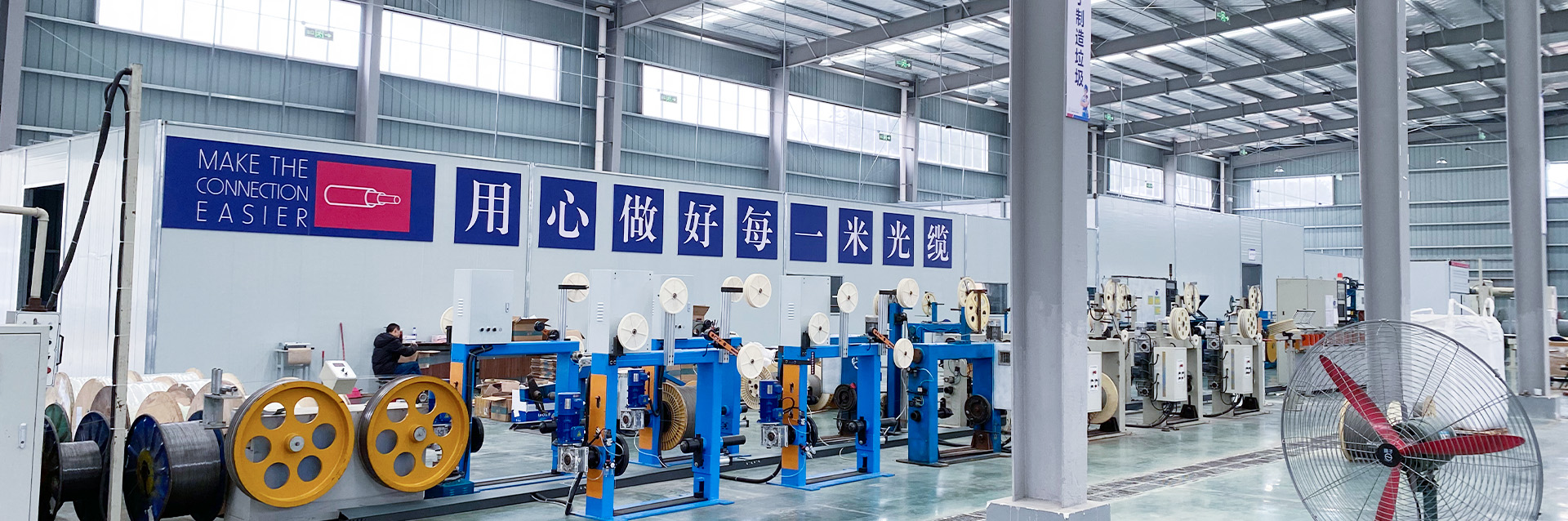
Oyi international., Ltd. is a dynamic and innovative fibre optic cable company based in Shenzhen, China. Since its inception in 2006, OYI has been dedicated to providing world-class fibre optic products and solutions to businesses and individuals across the globe. Our Technology R&D department has more than 20 specialized staff committed to developing innovative technologies and providing high-quality products and services. We export our products to 143 countries and have established long-term partnerships with 268 clients.
Our products are widely used in telecommunications, data center, CATV, industrial and other areas. Our main products include various types of optical fiber cables, fiber optic linkers, fiber distribution series, fiber optic connectors, fiber optic adapters, fiber optic couplers, fiber optic attenuators, and WDM series. Not only that, our products cover ADSS, ASU, Drop Cable, Micro Duct Cable, OPGW, Fast Connector, PLC Splitter, Closure, FTTH Box, etc. In addition, we provide our customers with complete fiber optic solutions, such as Fiber to the Home (FTTH), Optical Network Units (ONUs), and High Voltage Electrical Power Lines. We also provide OEM designs and financial support to help our customers integrate multiple platforms and reduce costs.
About Oyi & Company Philosophy
We are committed to innovation and excellence. Our team of experts are constantly pushing the boundaries of what’s possible, ensuring that we remain at the forefront of the industry. We invest heavily in research and development to ensure that we are always one step ahead of the competition. Our cutting-edge technology allows us to produce fibre optic cables that are not only faster and more reliable, but also more durable and cost-effective.
Our advanced manufacturing process ensures that our fibre optic cables are of the highest quality, guaranteeing lightning-fast speeds and reliable connectivity. Our commitment to excellence means that our customers can always rely on us to provide them with the best possible solutions. If you’re looking for a reliable, high-speed fibre optic cable solution, look no further than OYI. Contact us now to see how we can help you stay connected and take your business to the next level.


The Company has Obtained Certification





Complete Telecom Storage Solutions & Accessories