 0755-23179541
  sales@oyii.net
.png) 8618926041961
8618926041961Featured Indoor Fiber Distribution & Connection Hardware
Explore our premium selections tailored for seamless media conversion and optical termination inside modern network cabinets and wall boxes.
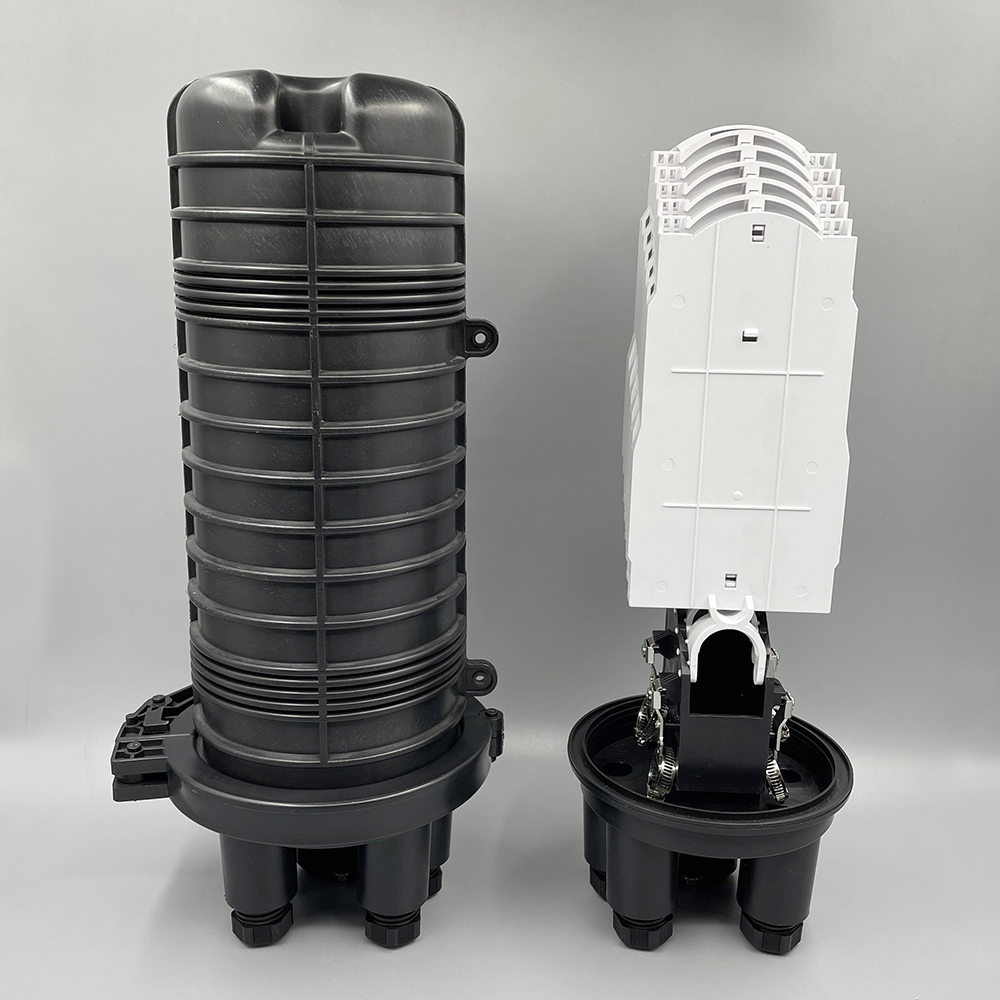
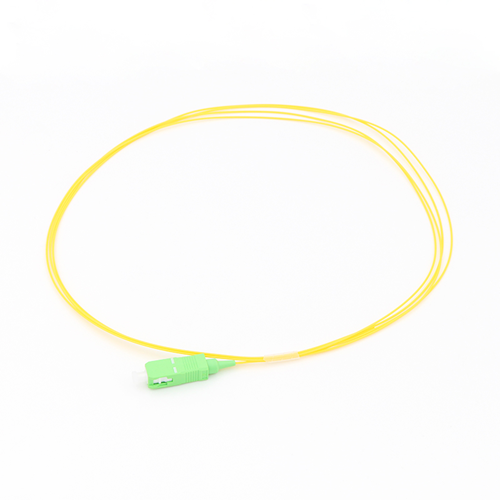
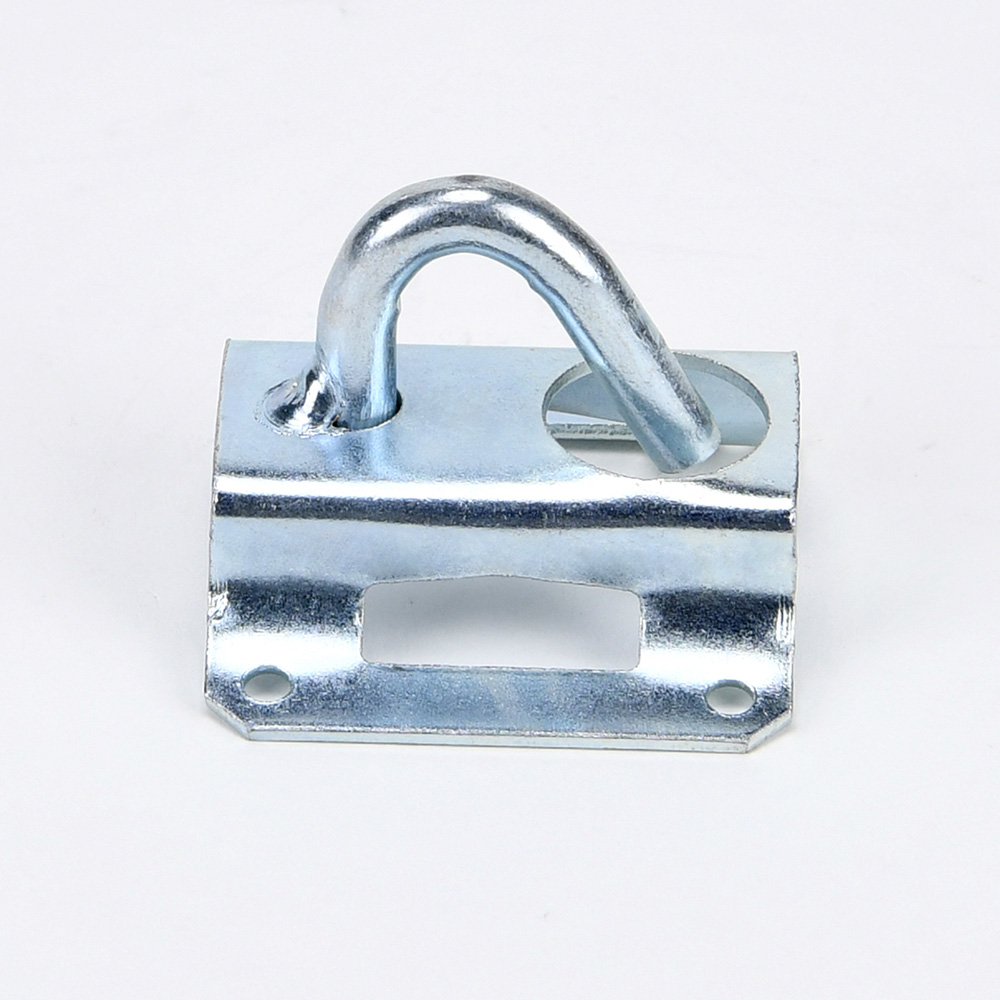
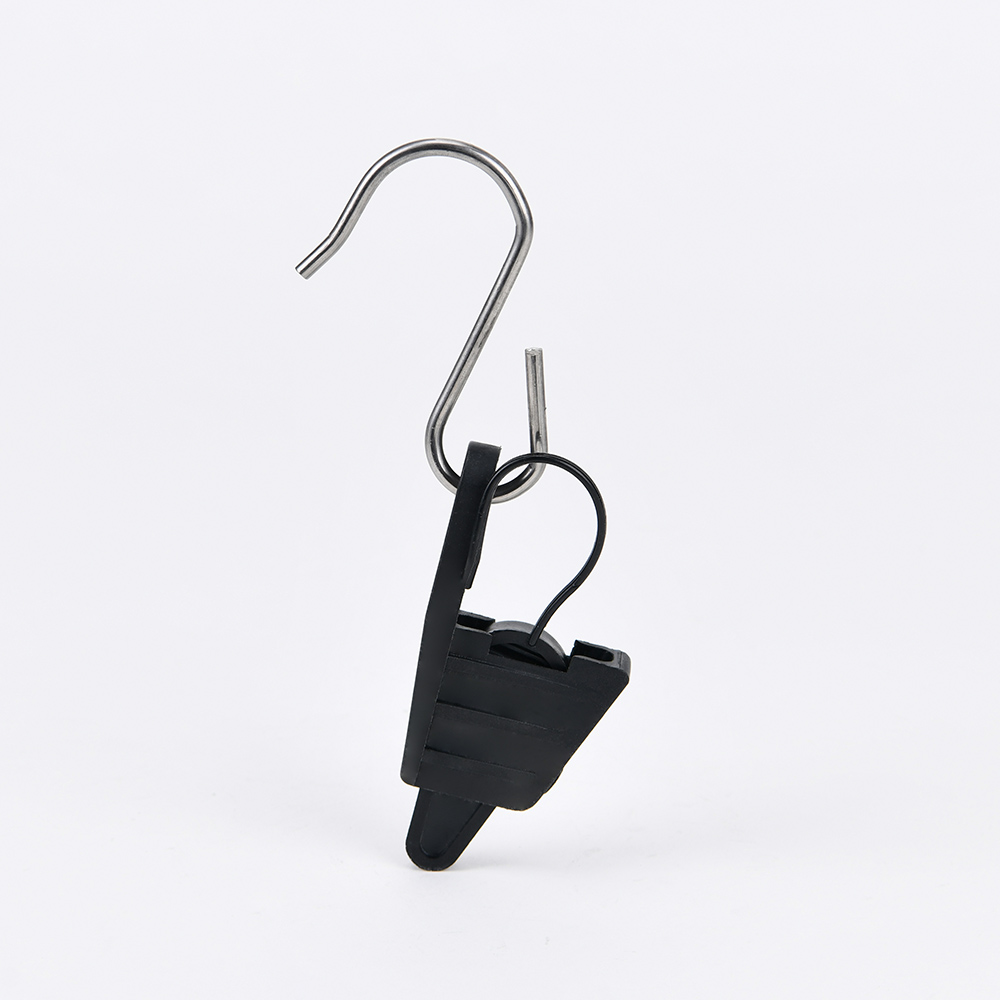
Commercial & Industrial Status of Media Convertor Optics in Indoor Networks
In the era of hyper-connectivity, enterprise networks, smart buildings, and residential broadband structures are undergoing a massive transformation. The demand for bandwidth-intensive applications, such as 4K/8K video streaming, cloud computing, and real-time IoT processing, has pushed traditional copper infrastructures to their physical limits. Consequently, fiber-to-the-home (FTTH), fiber-to-the-office (FTTO), and fiber-to-the-room (FTTR) have emerged as the standard architectures for modern installations.
However, completely replacing existing legacy Ethernet copper infrastructure is rarely economically viable or physically practical. This is where the Media Convertor Optic plays a critical role. Serving as the vital bridge between optical fiber backbones and copper-based Local Area Networks (LANs), media converters translate light signals into electrical signals (and vice versa) without sacrificing speed or integrity. When integrated directly into indoor fiber optic terminal boxes and wall boxes, these converters streamline the deployment of high-speed networks, making them cleaner, more compact, and highly scalable.
Key Market Driver: Hybrid Networking Infrastructure
The global market for media converters is experiencing robust growth, driven by the integration of active conversion equipment inside passive terminal enclosures. This hybrid approach minimizes signal attenuation, eliminates electromagnetic interference (EMI) in industrial environments, and drastically reduces installation footprints.
Today's industrial and commercial sectors demand robust, space-saving designs. Standard media converters previously sat loosely on desks or inside bulky server racks. Today, specialized compact media converters are engineered specifically to snap onto DIN rails or fit snugly inside low-profile wall-mounted enclosure boxes. This integration ensures that delicate fiber terminations, splices, and active media conversion units are housed under a single, secure, and organized protective cover.
Deep Application Scenarios: Where Fiber Meets Converter
Integrating media converters inside indoor wall boxes and distribution terminals is not a one-size-fits-all solution. Different environments present unique challenges. Below, we analyze three primary deployment scenarios where this technology is highly vital:
1. Enterprise Offices and Smart Commercial Buildings
In modern corporate offices, structured cabling must support dynamic work environments. Often, the main distribution frame (MDF) is located hundreds of meters away in the basement, exceeding the 100-meter physical limit of standard copper Ethernet cables. By running single-mode fiber optic cables to localized intermediate distribution frames (IDF) or wall-mounted boxes on each floor, installers bypass this distance limitation.
Inside these wall boxes, a compact media converter converts the incoming fiber connection into standard RJ45 copper ports, which then feed local workstations, VoIP phones, and wireless access points (WAPs). Using a PoE (Power over Ethernet) media converter inside the wall box allows the unit to simultaneously power the connected devices, eliminating the need for separate electrical outlets near the ceiling or walls.
2. FTTx and Smart Home Residential Deployments
For FTTH (Fiber to the Home) and FTTR (Fiber to the Room) architectures, telecommunication operators deliver high-speed fiber lines directly to residential doorsteps. However, residential hardware (like home routers, smart TVs, and gaming consoles) still predominantly utilizes copper RJ45 interfaces.
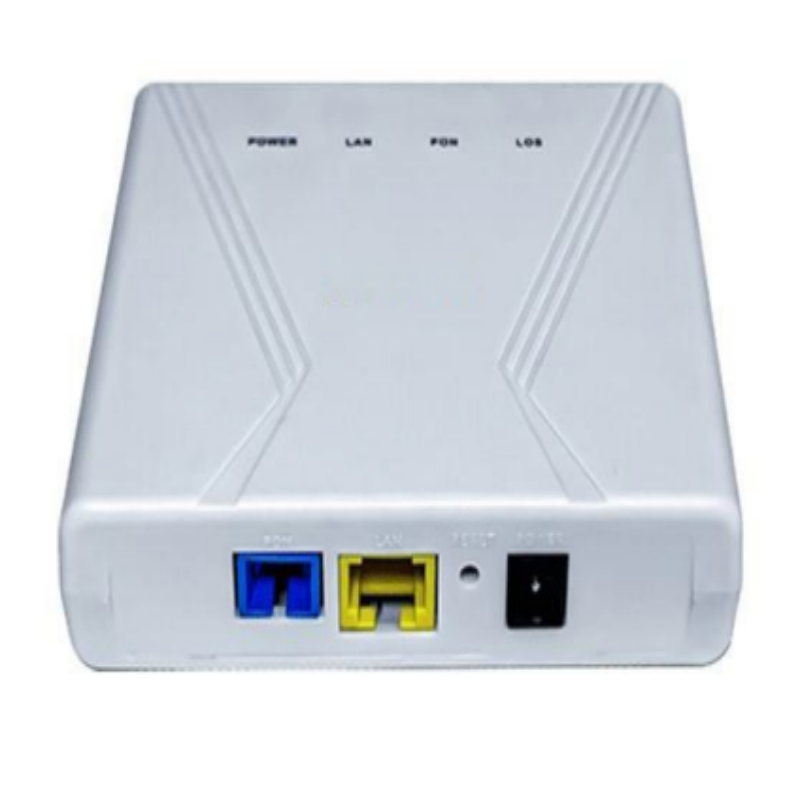
An indoor fiber optic terminal box (such as the OYI-FTB-16A Terminal Box) is installed at the home entrance. Inside this box, the incoming drop cable is terminated using high-precision pigtails (such as the SC/APC SM 0.9mm Pigtail). A miniature optical media converter or Optical Network Unit (ONU) is positioned directly inside or adjacent to this box to transition the signal to copper Ethernet, providing high-speed, low-latency internet throughout the household without exposing fragile glass fibers to accidental domestic damage.
Space Optimization
Consolidates fiber splicing, patching, and active media conversion into a single wall-mounted enclosure.
Enhanced Signal Security
Protects vulnerable optical fibers from bending stress, environmental dust, and unauthorized physical contact.
3. Industrial Automation and Harsh Indoor Environments
In manufacturing plants and industrial warehouses, electromagnetic interference (EMI) from heavy machinery, motors, and high-voltage power lines can corrupt data transmitted over copper cables. Fiber optic cables are immune to EMI, making them the perfect choice for traversing industrial floors.
At the machine interface or control panel, a ruggedized indoor wall box houses an industrial-grade media converter. The optical signal is converted back to copper only for the final few inches to connect to Programmable Logic Controllers (PLCs) or industrial cameras. This ensures error-free data transmission and maintains the high uptime required for automated production lines.
Technical Challenges & Structural Requirements for Wall Box Integration
Integrating active electronic components (media converters) inside passive enclosures (terminal boxes) introduces several engineering and structural challenges that designers and installers must address:
Thermal Management and Heat Dissipation
Unlike passive fiber patch panels, media converters contain active silicon chips, transceivers, and power regulators that generate heat. When enclosed in a small, sealed plastic or metal wall box, temperature levels can rise rapidly. If the temperature exceeds the operating limit (typically 55°C to 70°C for commercial grade), the transceiver's laser diode will degrade, leading to packet loss or total hardware failure. Wall boxes designed for media converter integration must feature ventilation slots, heat sinks, or be constructed from thermally conductive materials to facilitate passive airflow.
Cable Management and Bend Radius Protection
Optical fibers are highly sensitive to bending. Bending a fiber cable beyond its minimum bend radius causes macrobending losses, which attenuate the optical signal and can physically damage the glass core. Inside a crowded wall box containing a media converter, power supply cables, and copper patch cords, managing space is critical. Enclosures must feature integrated routing spools, splice trays, and fiber guides to guarantee that the fiber pigtails maintain a safe bend radius (typically minimum 30mm) under all conditions.
Power Source Accessibility
Active media converters require external power (typically 5V, 9V, or 48V DC). Providing power inside a closed wall box requires careful planning. Solutions include using Power over Ethernet (PoE) to power the converter from the copper side, integrating miniature AC/DC power modules within the box, or utilizing centralized power distribution units that feed low-voltage DC power to multiple wall boxes simultaneously.
Future Trends: The Evolution of Indoor Fiber Distribution
As networks evolve toward higher speeds like 10G-PON, Wi-Fi 7, and beyond, the technology surrounding indoor fiber termination and media conversion is rapidly advancing:
- Miniaturization (Micro-ONUs and Micro-Converters): Future media converters are shrinking to the size of a standard RJ45 connector, allowing them to fit directly inside standard wall outlets (Keystone jacks) without requiring dedicated large wall boxes.
- Smart Managed Converters: Modern deployments increasingly utilize managed media converters that report diagnostics (such as optical RX/TX power, temperature, and link status) back to central network management systems, allowing operators to troubleshoot issues remotely without dispatching technicians.
- Energy-Efficient Ethernet (EEE): Green technology is becoming mandatory. Modern converters automatically enter low-power standby modes when network traffic is idle, significantly reducing the cumulative carbon footprint of large-scale commercial building deployments.
Oyi International., Ltd.
A dynamic and innovative fiber optic cable leader based in Shenzhen, China.
Since its inception in 2006, OYI has been dedicated to providing world-class fibre optic products and solutions to businesses and individuals across the globe. Our Technology R&D department has more than 20 specialized staff committed to developing innovative technologies and providing high-quality products and services. We export our products to 143 countries and have established long-term partnerships with 268 clients.
Our products are widely used in telecommunications, data center, CATV, industrial and other areas. Our main products include various types of optical fiber cables, fiber optic linkers, fiber distribution series, fiber optic connectors, fiber optic adapters, fiber optic couplers, fiber optic attenuators, and WDM series. Not only that, our products cover ADSS, ASU, Drop Cable, Micro Duct Cable, OPGW, Fast Connector, PLC Splitter, Closure, FTTH Box, etc. In addition, we provide our customers with complete fiber optic solutions, such as Fiber to the Home (FTTH), Optical Network Units (ONUs), and High Voltage Electrical Power Lines. We also provide OEM designs and financial support to help our customers integrate multiple platforms and reduce costs.
About Oyi - Project Showcase & Factory Operations
A visual insight into our manufacturing excellence, quality control, and global project footprints.


Company Philosophy & Factory Strength
Committed to innovation, quality, and long-term customer success.
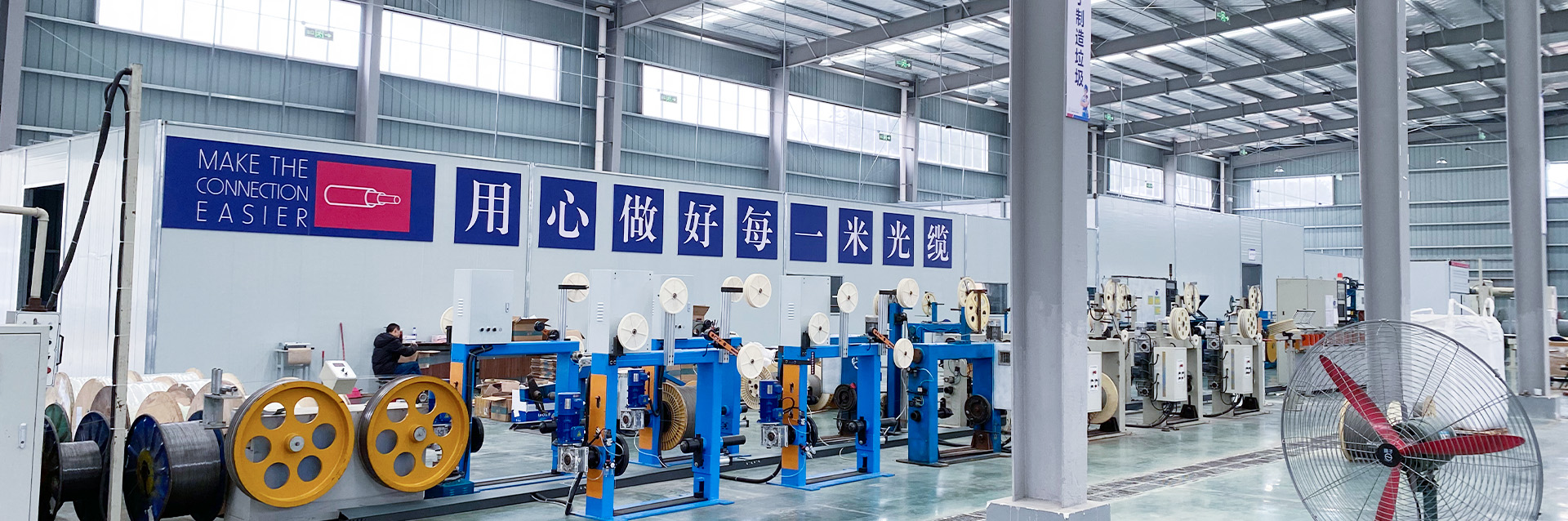
Our Factory
We are committed to innovation and excellence. Our team of experts are constantly pushing the boundaries of what’s possible, ensuring that we remain at the forefront of the industry. We invest heavily in research and development to ensure that we are always one step ahead of the competition. Our cutting-edge technology allows us to produce fibre optic cables that are not only faster and more reliable, but also more durable and cost-effective.
Our advanced manufacturing process ensures that our fibre optic cables are of the highest quality, guaranteeing lightning-fast speeds and reliable connectivity. Our commitment to excellence means that our customers can always rely on us to provide them with the best possible solutions.
If you’re looking for a reliable, high-speed fibre optic cable solution, look no further than OYI. Contact us now to see how we can help you stay connected and take your business to the next level.
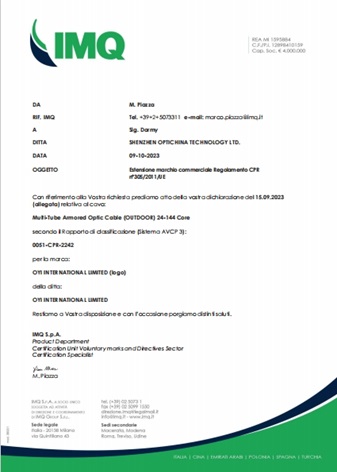
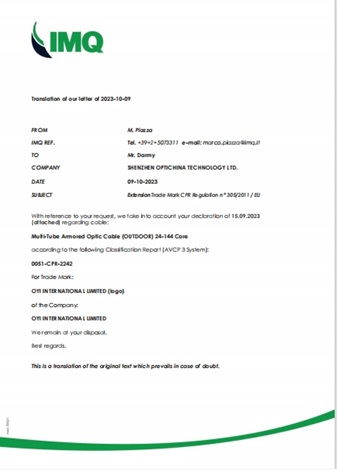
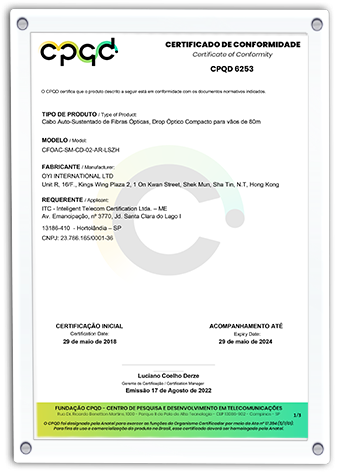
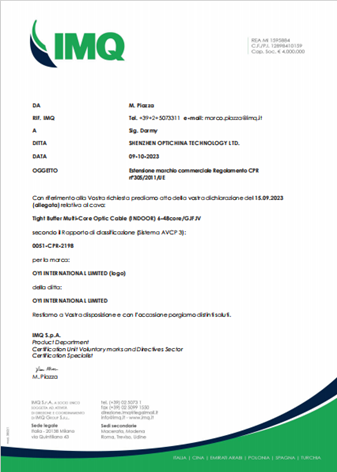
The Company has Obtained Certification


Full Product Catalog for Fiber & Media Conversion
Explore our complete range of fiber optic solutions, from drop clamps and pigtails to high-capacity terminal distribution boxes.