 0755-23179541
  sales@oyii.net
.png) 8618926041961
8618926041961Featured LAN Transceiver Interconnect Solutions

The Critical Nexus: Fiber Optic Cables and LAN Optical Transceivers
In modern enterprise environments, the Local Area Network (LAN) serves as the central nervous system of business operations. As data demands skyrocket due to cloud computing, artificial intelligence (AI), big data analytics, and real-time communication tools, traditional copper-based infrastructures are hitting their physical limits. Today, the transition to high-speed optical fiber is not just an upgrade—it is a necessity. At the heart of this transition is the seamless interface between fiber optic cables and optical transceivers.
Optical transceivers (such as SFP, SFP+, QSFP28, and QSFP-DD) act as the translation engine, converting electrical signals from switches and routers into optical pulses. However, the performance of these active devices is entirely dependent on the quality of the passive physical layer: the fiber optic cables. Without high-grade fiber optic connections, signal attenuation, chromatic dispersion, and return loss can degrade network throughput, leading to packet drops, increased latency, and costly system downtime.
Why Physical Layer Quality Determines Network Performance
Even the most advanced 400G optical transceiver will fail to deliver its rated bandwidth if the underlying fiber optic cable assembly exhibits high insertion loss or poor connector alignment. Selecting the correct fiber type (Single-mode OS2 vs. Multi-mode OM3/OM4/OM5) and utilizing premium termination accessories are fundamental to future-proofing enterprise LAN infrastructures.
Industrial Status and Commercial Landscape of LAN Fiber Optic Infrastructure
The global market for fiber optic components is experiencing unprecedented growth. Industrial automation, smart manufacturing (Industry 4.0), and the expansion of hyperscale data centers are driving the demand for high-density, reliable cabling. In a commercial landscape, organizations are moving away from legacy point-to-point cabling configurations toward structured cabling architectures. This shift allows for rapid scaling, simplified maintenance, and optimized airflow in server rooms.
Furthermore, the commercial sector is witnessing a convergence of IT (Information Technology) and OT (Operational Technology). Industrial LANs now span across harsh factory floors, requiring fiber optic cables with robust outer jackets, rodent protection, and high tensile strength. Whether connecting edge devices in a smart campus or linking core switches in a financial trading center, the synergy between transceivers and cables remains the cornerstone of modern network engineering.
Key Technological Demands in Modern Optical Interconnections
Ensuring optical signals travel long distances across campus backbones without the need for active repeaters, preserving signal integrity.
Deploying Bend-Insensitive Single-Mode Fiber (BISMF) to allow tight routing within dense patch panels and terminal boxes without macrobend losses.
Utilizing LSZH (Low Smoke Zero Halogen) jackets and armored designs to protect network links against physical stress, moisture, and fire hazards.
Deep Application Scenarios of Fiber Optic Cables in LAN Transceiver Connections
Scenario A: Enterprise Core Switch Interconnects & Data Center Backbones
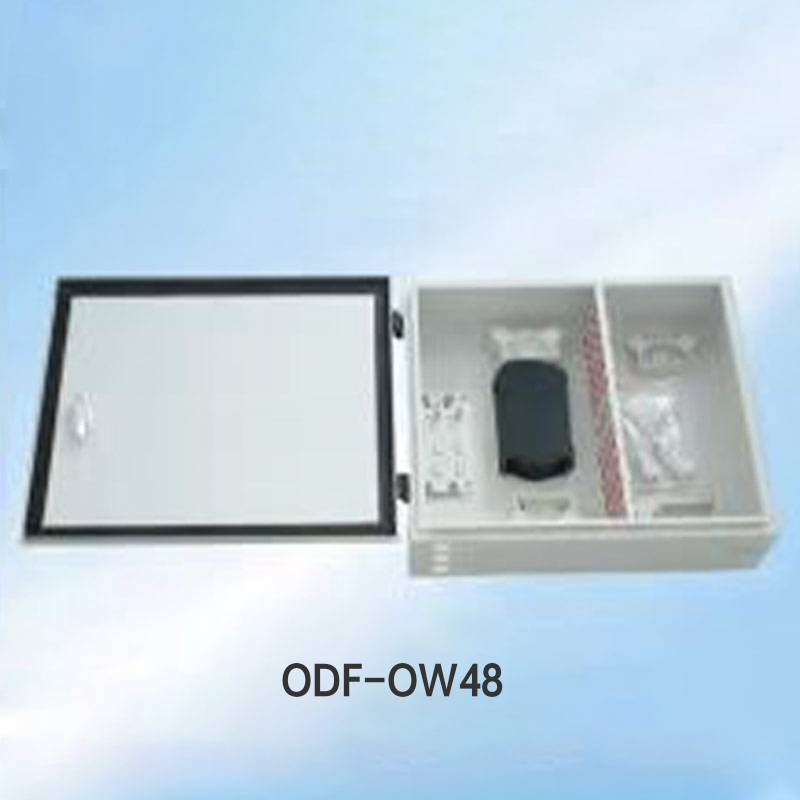
Within the core of any enterprise network, high-density switches must exchange vast amounts of data. This environment typically utilizes multi-mode fiber patch cords (OM4 or OM5) paired with short-reach transceivers (SR4/SR8) for distances up to 100 meters, or single-mode fiber (OS2) paired with long-reach transceivers (LR4/PLR4) for campus-wide links. The deployment of high-density termination boxes, such as the OYI-FTB-16A, ensures that these critical connections are organized, protected, and easily accessible for upgrades or troubleshooting.
Scenario B: Passive Optical LAN (POL) and Fiber-to-the-Desk (FTTD)
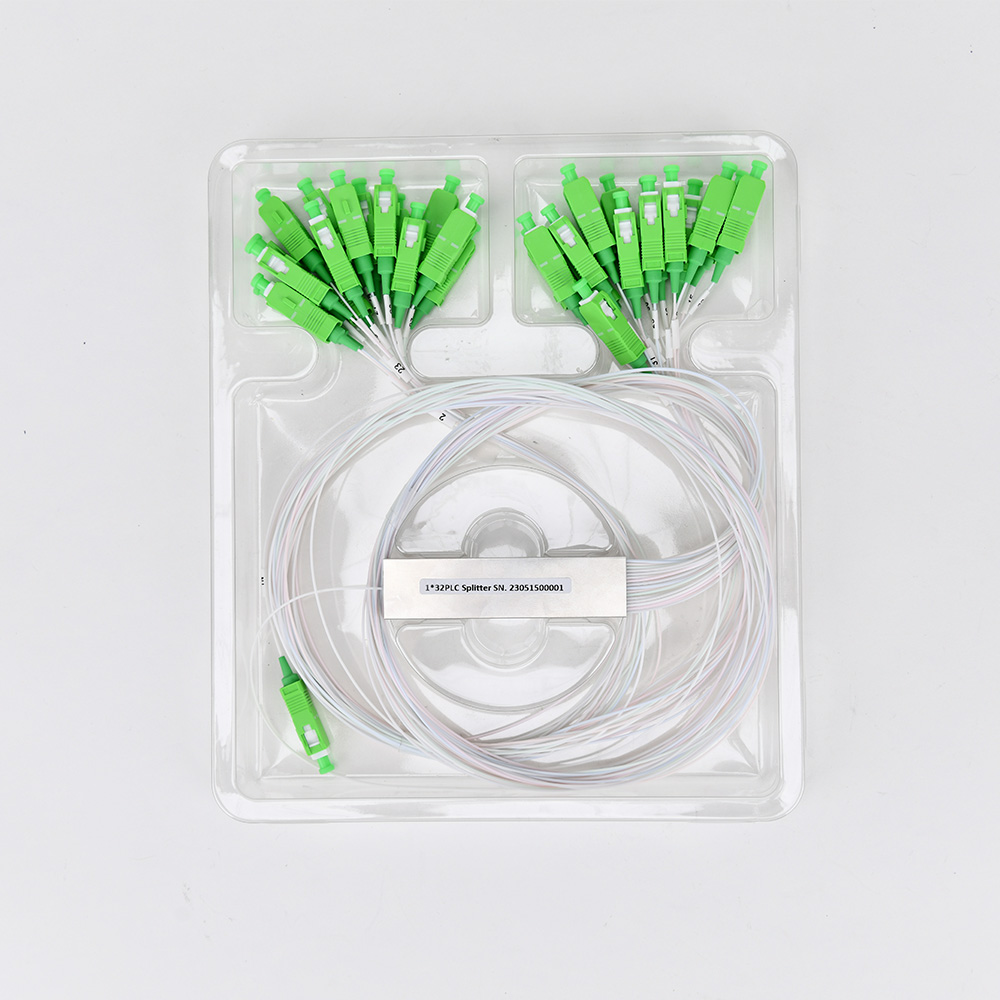
To reduce power consumption and cooling costs, many modern office buildings are adopting Passive Optical LAN (POL) architectures. In a POL setup, single-mode fiber runs directly from the main distribution frame to local work areas. By utilizing splitters (such as the Mini Steel Tube Type Splitter), a single optical port can serve multiple end-user devices. This reduces the footprint of telecommunication closets and replaces bulky copper bundles with thin, lightweight fiber cables, drastically simplifying cable management.
Scenario C: Industrial Automation and Harsh Environment LANs
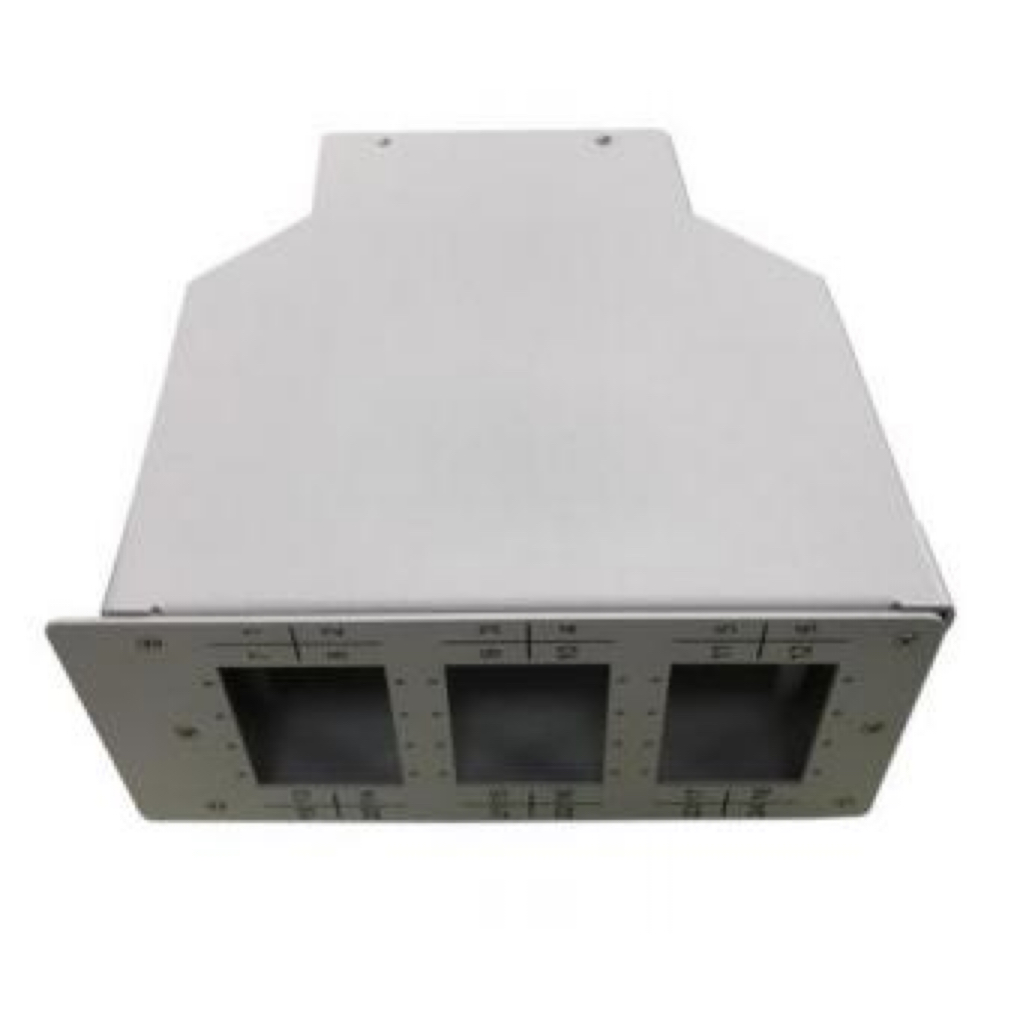
Industrial environments present unique challenges, including electromagnetic interference (EMI), high vibration, and extreme temperature fluctuations. Copper cabling is highly susceptible to EMI from heavy machinery, whereas optical fiber is completely immune. In these setups, fiber optic cables are terminated in ruggedized, DIN-rail mounted patch panels (like the OYI-DIN-07-A Series) and connected to industrial optical transceivers. This guarantees uninterrupted data flow for real-time monitoring and control systems.
Scenario D: High-Speed Wireless Backhaul (Wi-Fi 6/7 and 5G Small Cells)
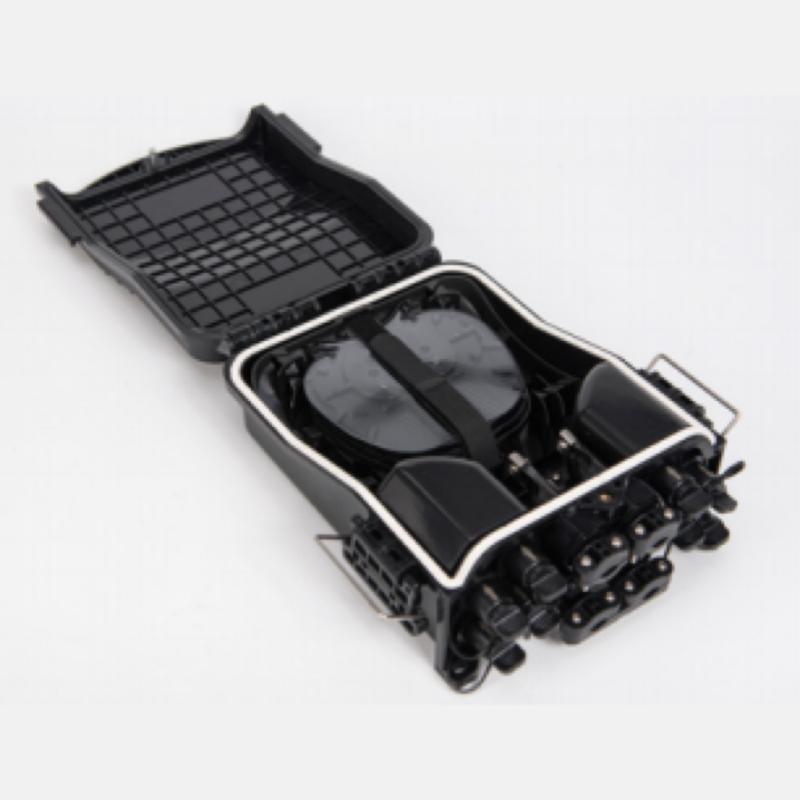
As wireless access points (APs) exceed multi-gigabit speeds, the backhaul cabling must scale accordingly. Modern enterprise networks deploy optical fiber directly to ceiling-mounted APs. Using compact terminal boxes (such as the OYI-FATC 8A), technicians can safely terminate the horizontal fiber run and patch it directly into the AP’s optical transceiver port, eliminating bottleneck risks at the wireless edge.
Oyi International Co., Ltd. - Driving Optical Innovation
Oyi international., Ltd. is a dynamic and innovative fibre optic cable company based in Shenzhen, China. Since its inception in 2006, OYI has been dedicated to providing world-class fibre optic products and solutions to businesses and individuals across the globe. Our Technology R&D department has more than 20 specialized staff committed to developing innovative technologies and providing high-quality products and services. We export our products to 143 countries and have established long-term partnerships with 268 clients.
Our products are widely used in telecommunications, data center, CATV, industrial and other areas. Our main products include various types of optical fiber cables, fiber optic linkers, fiber distribution series, fiber optic connectors, fiber optic adapters, fiber optic couplers, fiber optic attenuators, and WDM series. Not only that, our products cover ADSS, ASU, Drop Cable, Micro Duct Cable, OPGW, Fast Connector, PLC Splitter, Closure, FTTH Box, etc. In addition, we provide our customers with complete fiber optic solutions, such as Fiber to the Home (FTTH), Optical Network Units (ONUs), and High Voltage Electrical Power Lines. We also provide OEM designs and financial support to help our customers integrate multiple platforms and reduce costs.
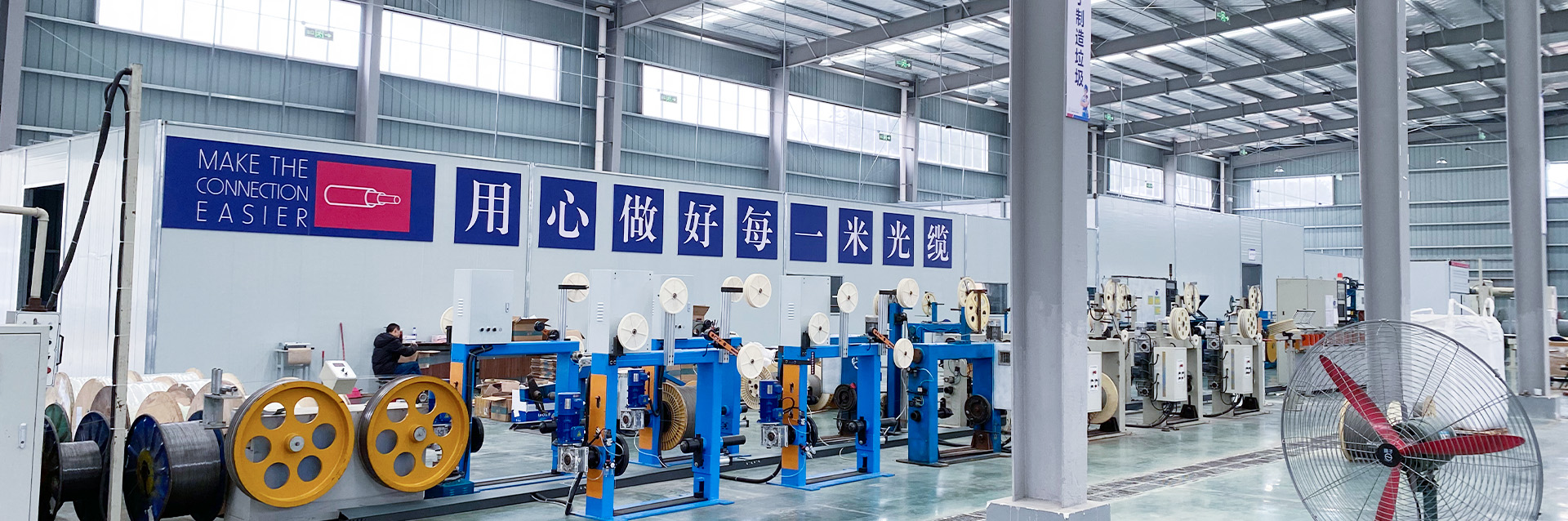
Our Manufacturing and Operations Showcase


Company Philosophy & Factory Operations
We are committed to innovation and excellence. Our team of experts are constantly pushing the boundaries of what’s possible, ensuring that we remain at the forefront of the industry. We invest heavily in research and development to ensure that we are always one step ahead of the competition. Our cutting-edge technology allows us to produce fibre optic cables that are not only faster and more reliable, but also more durable and cost-effective.
Our advanced manufacturing process ensures that our fibre optic cables are of the highest quality, guaranteeing lightning-fast speeds and reliable connectivity. Our commitment to excellence means that our customers can always rely on us to provide them with the best possible solutions.
If you’re looking for a reliable, high-speed fibre optic cable solution, look no further than OYI. Contact us now to see how we can help you stay connected and take your business to the next level.
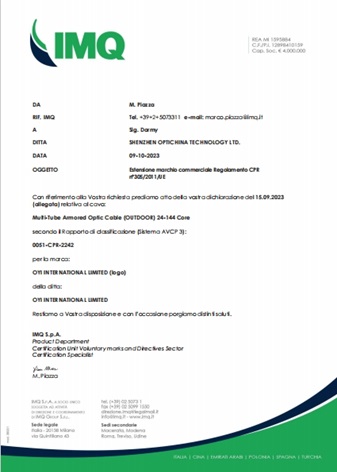
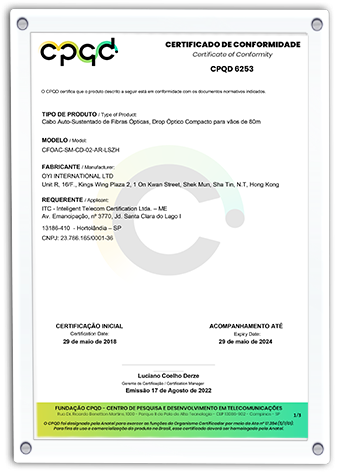
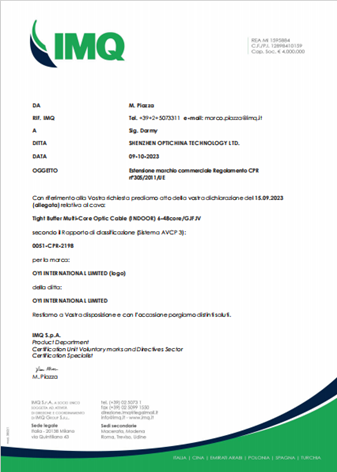
The Company has Obtained Certification
Quality assurance is paramount in optical telecommunications. OYI maintains rigorous manufacturing standards backed by leading global certifications, ensuring compatibility and compliance across international markets.