 0755-23179541
 sales@oyii.net
 8618926041961
Primary Optical Fiber Enclosures & Hardware for Colombia
Proven optical hardware engineered to withstand severe tropical humidity, high altitude installations, and aggressive field environments across the Andean and Caribbean corridors.
Why Colombian Telecommunications Depend on Specialized Splice Closures
From Bogotá's high plateau to the dense equatorial rainforests of the Pacific, optical splice closures must satisfy extreme ecological and mechanical demands.
National Digital Expansion
Initiatives led by the Ministry of Information Technologies and Communications (MinTIC), including 'Conectividad para la Paz', demand thousands of robust aerial and underground closures to bridge connectivity gaps across rural municipalities.
High-Altitude & Tropical Durability
Operating from sea-level coastal ports like Cartagena and Barranquilla to high-altitude Andean terrains over 2,600 meters in Bogotá, enclosures must feature UV-stabilized anti-aging polymers and true IP68 waterproof hermetic sealing.
5G & FTTH Network Densification
Tier-1 operators (Claro, Tigo, Movistar, ETB) are ramping up 5G mid-band rollouts and high-density GPON/XGS-PON backbones, accelerating the need for pre-connectorized and plug-and-play FATC splice distribution boxes.
Commercial and Industrial Context of Fiber Optic Closures in Colombia
The telecommunications infrastructure in Colombia is undergoing an unprecedented modernization cycle. As one of Latin America's fastest-growing digital economies, the country has prioritized the expansion of fiber-to-the-home (FTTH), fiber-to-the-tower (FTTT) for 5G readiness, and inter-city terrestrial transmission routes. Within this demanding framework, fiber optic splice closures (known locally as mangas de empalme or cajas de empalme óptico) serve as critical junctions that safeguard sensitive fusion splices from harsh environmental degradation, mechanical strain, and moisture ingress.
Colombia's topography presents a distinct set of geographical challenges. Network routes traverse diverse thermal floors—ranging from warm, humid coastal zones in Bolívar and Atlántico to the freezing, thin atmosphere of the Andean cordilleras. Consequently, local engineering specifications strictly prohibit low-grade closures that suffer from micro-cracking, gasket embrittlement, or seal failure under persistent UV exposure and thermal oscillation. Qualified suppliers and exporters must provide enclosures certified for long-term outdoor mechanical resilience, chemical neutrality, and ingress protection of IP68 or higher.
Emerging Industry Trends in the Colombian Fiber Enclosure Sector
Historically, legacy deployments throughout Colombia utilized standard dome-style heat-shrink closures that required specialized torches and extensive labor during field intervention. However, the modernization of network installation standards has catalyzed three major industrial transitions across regional contractors and network operators:
1. Shift Toward Mechanical Gasket and Gel-Sealed Closures
Telecommunications operators are rapidly abandoning open-flame heat-shrink methods in favor of high-grade silicone mechanical seals and re-enterable gel technology. This transition dramatically reduces installation times in dense metropolitan centers such as Medellín, Cali, and Bucaramanga, while eliminating the human error associated with uneven flame application during tropical rainstorms.
2. Adoption of Pre-Connectorized Hardened Fiber Access Terminals (FATC)
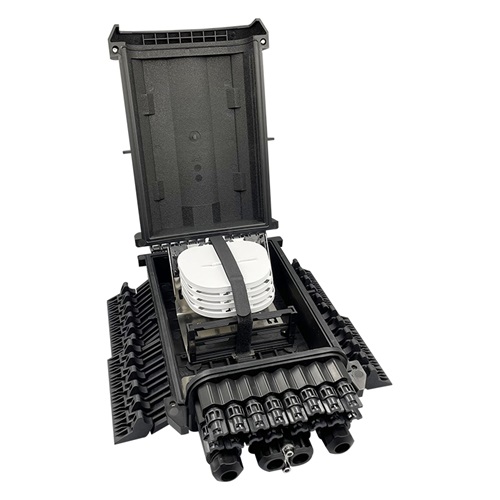
With aggressive customer turn-up targets for FTTH broadband, Colombian internet service providers (ISPs) and regional WISPs transitioning to optical glass are adopting hardened, pre-connectorized closures like the OYI-FATC series. By incorporating IP-rated external adapters (such as SC/APC or FastConnect compatible interfaces), technicians can connect new subscribers without opening the main splice tray chamber, preserving splice integrity and slashing truck-roll duration.
3. High-Capacity Underground Closures for Metro Ducts and Vaults
In congested city centers where municipal ordinances enforce subterranean cabling to preserve aesthetic landscapes, manhole-installed inline (horizontal) splice closures must endure perpetual immersion in water, vehicular vibrations, and exposure to urban runoff contaminants. Industrial-grade closures engineered with modified polypropylene (PP) compounded with high-strength impact modifiers ensure superior resistance to structural deformation under sustained hydrostatic pressure.
Localized Application Scenarios in Colombia's Key Verticals
Fiber optic splice closures supplied to Colombia are deployed across distinct industrial ecosystems, each demanding specialized mounting configurations, cable retention hardware, and fiber management architecture:
Aerial Deployments Along Power Utility Lines (ADSS & OPGW)
Major power transmission operators such as ISA and regional energy distributors leverage their high-voltage grid infrastructure to lease optical fibers across departmental borders. In these high-voltage corridors, splice closures must work harmoniously with anti-tracking ADSS hardware, anchoring clamps, and tower-mounting brackets. Closures installed on high-tension steel towers must withstand intense wind vibration, aeolian galloping, and electrical field induction.
Energy, Mining, and Oil Pipeline SCADA Backbones
Colombia's petroleum sector, centered around the Llanos Orientales (Meta, Casanare) and the Magdalena River basin, relies heavily on optical telemetry along pipelines for leak detection and SCADA supervision. Closures deployed in these sectors must exhibit high resistance to petrochemical fumes, sulfur compounds, and extreme soil moisture when buried directly or placed within handholes along right-of-ways.
Metropolitan Subterranean Rings and Microduct Expansions
Empresas de Telecomunicaciones de Bogotá (ETB) and national carriers operating in capital districts utilize underground duct infrastructure where space is at a premium. Here, slim-profile inline closures with multi-cable entry ports allow network engineers to route micro-cables and drop cables efficiently, optimizing splice tray capacity up to 288 or 576 fibers within confined chamber dimensions.
Regulatory Standards, RETIE Compliance, and Quality Assurance
Sourcing optical splice closures for Colombia requires full compliance with both international optical benchmarks and specific local engineering frameworks. Enclosures must conform to Telcordia GR-771-CORE requirements regarding water tightness, cable retention, axial pullout resistance, and impact tolerance. Furthermore, installations touching electrical utility infrastructure must comply with Colombia's Technical Regulation of Electrical Installations (RETIE), ensuring that dielectric materials prevent hazardous flashovers or conductive accidents during routine lineman maintenance.
Every closure engineered and exported by OYI is subjected to rigorous quality testing before shipment. This includes pressurized bubble testing to verify IP68 compliance, optical attenuation insertion loss checks, climatic chamber aging tests (-40°C to +85°C), and torsion clamping validation. Our strict adherence to ISO9001 and international European CPR flammability standards guarantees that Colombian network integrators receive hardware that ensures uninterrupted network uptime for over 25 years.
Oyi international ., Ltd.
Oyi international., Ltd. is a dynamic and innovative fibre optic cable company based in Shenzhen, China. Since its inception in 2006, OYI has been dedicated to providing world-class fibre optic products and solutions to businesses and individuals across the globe. Our Technology R&D department has more than 20 specialized staff committed to developing innovative technologies and providing high-quality products and services. We export our products to 143 countries and have established long-term partnerships with 268 clients.
Our products are widely used in telecommunications, data center, CATV, industrial and other areas. Our main products include various types of optical fiber cables, fiber optic linkers, fiber distribution series, fiber optic connectors, fiber optic adapters, fiber optic couplers, fiber optic attenuators, and WDM series. Not only that, our products cover ADSS, ASU, Drop Cable, Micro Duct Cable, OPGW, Fast Connector, PLC Splitter, Closure, FTTH Box, etc. In addition, we provide our customers with complete fiber optic solutions, such as Fiber to the Home (FTTH), Optical Network Units (ONUs), and High Voltage Electrical Power Lines. We also provide OEM designs and financial support to help our customers integrate multiple platforms and reduce costs.
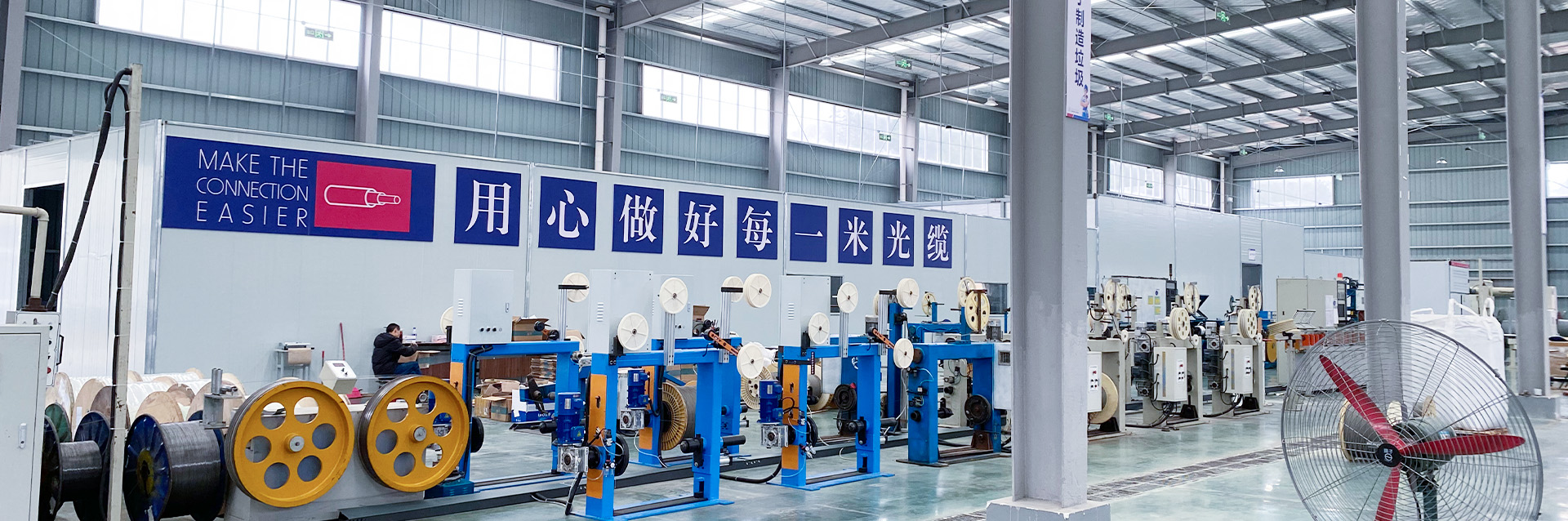
State-of-the-Art Production & Engineering Excellence
We are committed to innovation and excellence. Our team of experts are constantly pushing the boundaries of what’s possible, ensuring that we remain at the forefront of the industry.
We invest heavily in research and development to ensure that we are always one step ahead of the competition. Our cutting-edge technology allows us to produce fibre optic cables that are not only faster and more reliable, but also more durable and cost-effective. Our advanced manufacturing process ensures that our fibre optic cables are of the highest quality, guaranteeing lightning-fast speeds and reliable connectivity. Our commitment to excellence means that our customers can always rely on us to provide them with the best possible solutions.
If you’re looking for a reliable, high-speed fibre optic cable solution, look no further than OYI. Contact us now to see how we can help you stay connected and take your business to the next level.
Manufacturing Facility & Production Line


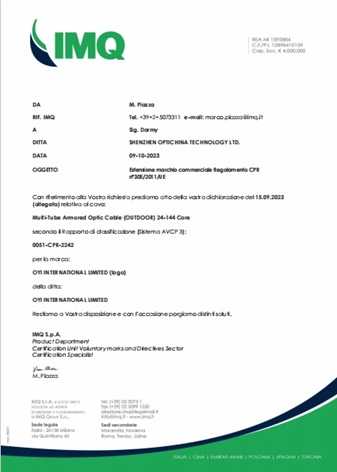
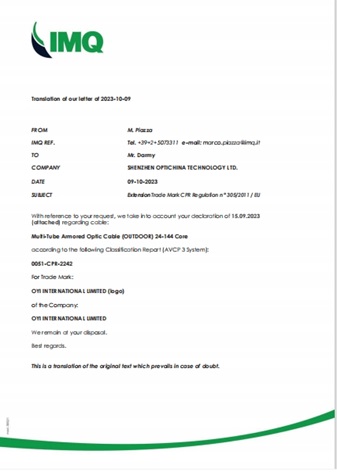
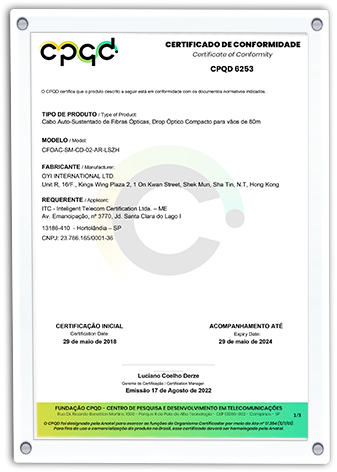
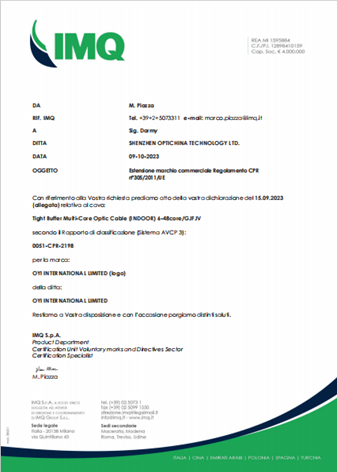
The Company has Obtained Certification


Export Logistics, Customization & Supply Chain to Colombia
Streamlined sea freight to Buenaventura and Cartagena, custom packaging, and flexible engineering specs tailored for Colombian telecom tenders.
Importing fiber optic splice closures and passive optical equipment into Colombia involves navigating customs procedures supervised by the Dirección de Impuestos y Aduanas Nacionales (DIAN). As an experienced exporter to Latin America, OYI provides comprehensive documentation—including Certificates of Origin, detailed commercial invoices, HS code harmonization (subheading 8536.70 for optical fiber connectors and splice closures), and factory test reports—to expedite customs clearance through principal maritime gateways.
Shipments destined for inland metropolitan centers such as Bogotá, Medellín, and the Coffee Axis typically route via the Pacific port of Buenaventura, offering the shortest multimodal transit to western and central Colombia. Meanwhile, shipments servicing northern departments (Atlántico, Magdalena, Bolívar) and Caribbean offshore links are seamlessly handled through the deep-water maritime terminals of Cartagena and Barranquilla. For urgent maintenance contracts and critical network repairs, air freight alternatives through El Dorado International Airport (BOG) ensure mission-critical components land within days.
Furthermore, OYI understands that Colombian tier-1 carriers and local contractors frequently operate under distinct OEM technical mandates. We offer custom logo silk-screening, barcode asset tagging for ERP management, pre-installed PLC splitters (1:8, 1:16 mini-type), and customized entry grommet diameters configured specifically for dielectric self-supporting (ADSS) cables, figure-8 cables, or micro-cables commonly deployed across the nation.
Complete FTTx Splice Closures & Optical Cabling Portfolio
Explore our full range of fiber access terminal closures, distribution units, drop cable clamps, and transmission cables for Colombian projects.