
 0755-23179541
  sales@oyii.net
.png) 8618926041961
8618926041961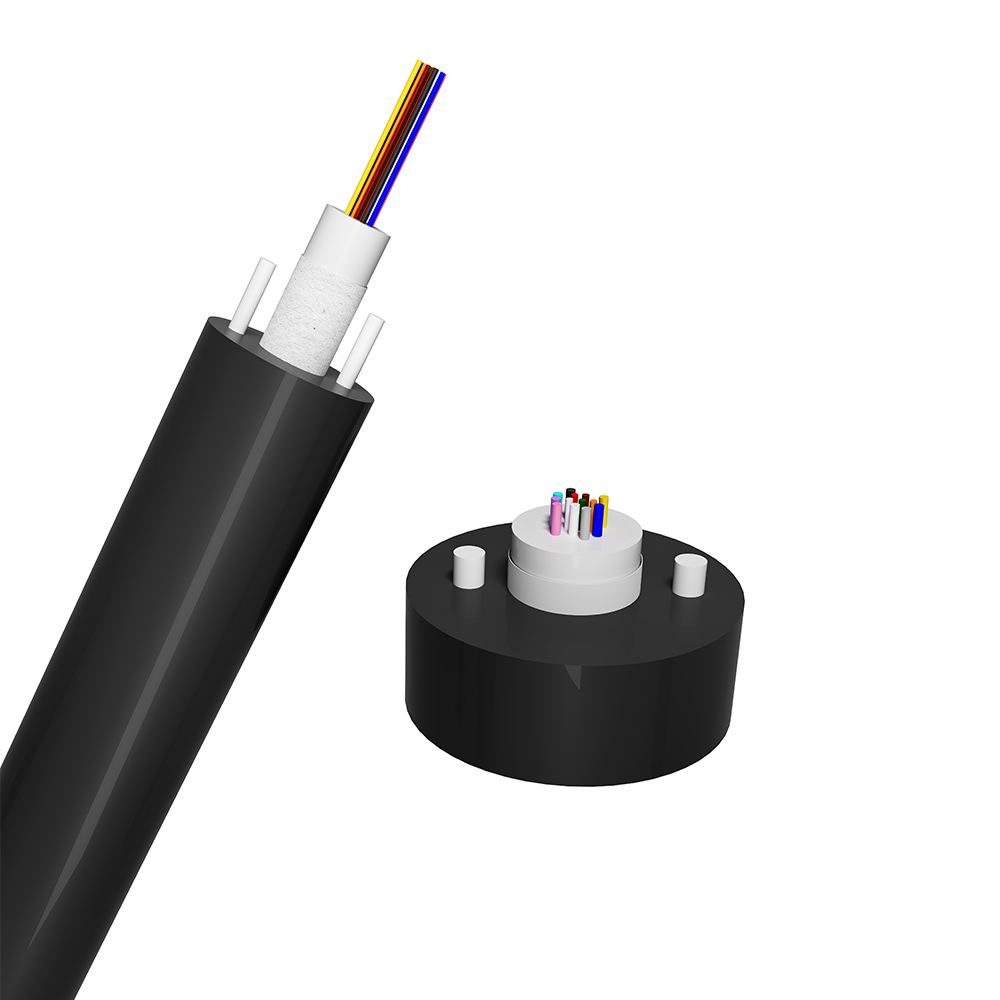
Central Loose Tube Non-metallic & Non-armored Fiber Optic Cable
GYFXTY
Central Loose Tube Non-metallic & Non-armored Fiber Optic Cables
Product Features
The two parallel FRP strength members provide enough tensile strength.
Resistant to high and low temperature cycles, resulting in anti-aging and a longer lifespan.
Small diameter and light weight, making it easy to lay.
Anti-UV PE jacket.
Resistant to high and low temperature cycle changes, resulting in anti-aging and longer lifespan.
Optical Characteristics
| Fiber Type | Attenuation | 1310nm MFD
(Mode Field Diameter) |
Cable Cut-off Wavelength λcc(nm) | |
| @1310nm(dB/KM) | @1550nm(dB/KM) | |||
| G652D | ≤0.36 | ≤0.22 | 9.2±0.4 | ≤1260 |
| G657A1 | ≤0.36 | ≤0.22 | 9.2±0.4 | ≤1260 |
| G657A2 | ≤0.36 | ≤0.22 | 9.2±0.4 | ≤1260 |
| G655 | ≤0.4 | ≤0.23 | (8.0-11)±0.7 | ≤1450 |
| 50/125 | ≤3.5 @850nm | ≤1.5 @1300nm | / | / |
| 62.5/125 | ≤3.5 @850nm | ≤1.5 @1300nm | / | / |
Technical Parameters
| Fiber Count | Cable Diameter (mm) ±0.3 |
Cable Weight (kg/km) |
Tensile Strength (N) | Crush Resistance (N/100mm) | Bending Radius (mm) | |||
| Long Term | Short Term | Long Term | Short Term | Static | Dynamic | |||
| 2-12 | 6.2 | 30 | 600 | 1500 | 300 | 1000 | 10D | 20D |
| 14-24 | 7.0 | 35 | 600 | 1500 | 300 | 1000 | 10D | 20D |
Application
FTTX, Access to the building from outside, Aerial.
Laying Method
Duct, Non self-supporting aerial, Direct buried.
Operating Temperature
| Temperature Range | ||
| Transportation | Installation | Operation |
| -40℃~+70℃ | -5℃~+45℃ | -40℃~+70℃ |
Standard
YD/T 769-2010
Packing And Mark
OYI cables are coiled on bakelite, wooden, or ironwood drums. During transportation, the right tools should be used to avoid damaging the package and to handle them with ease. Cables should be protected from moisture, kept away from high temperatures and fire sparks, protected from over-bending and crushing, and protected from mechanical stress and damage. It is not allowed to have two lengths of cable in one drum, and both ends should be sealed. The two ends should be packed inside the drum, and a reserve length of cable not less than 3 meters should be provided.

The color of cable markings is white. The printing shall be carried out at intervals of 1 meter on the outer sheath of the cable. The legend for the outer sheath marking can be changed according to the user's requests.
Test report and certification provided.
-

OYI-FAT F24C
This box is used as a termination point for the feeder cable to connect with drop cable in FTTX communication network system. It intergtates fiber splicing, splitting, distribution, storage and cable connection in one unit. Meanwhile, it provides solid protection and management for the FTTX network building. -

OPGW Optical Ground Wire
Layered stranded OPGW is one or more fiber-optic stainless steel units and aluminum-clad steel wires together, with stranded technology to fix the cable, aluminum-clad steel wire stranded layers of more than two layers, the product features can accommodate multiple fiber-optic unit tubes, fiber core capacity is large. At the same time, the cable diameter is relatively large, and the electrical and mechanical properties are better. The product features light weight, small cable diameter and easy installation. -
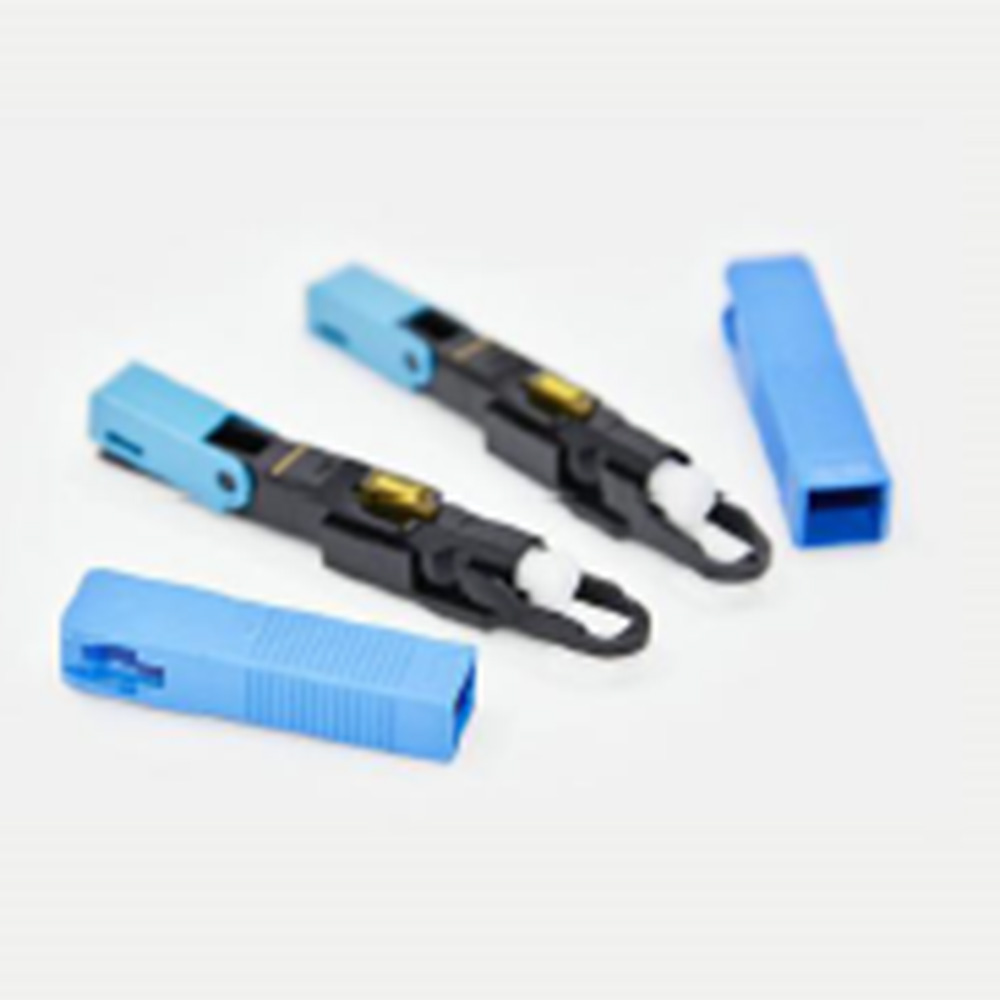
OYI B Type Fast Connector
Our fiber optic fast connector, OYI B type, is designed for FTTH (Fiber To The Home), FTTX (Fiber To The X). It is a new generation of fiber connector used in assembly and can provide open flow and precast types, with optical and mechanical specifications that meet the standard for optical fiber connectors. It is designed for high quality and high efficiency during installation, with a unique design for the crimping position structure. -

Cable Ties
Material: PA66 (UL-approved Polyamide 66), 94V‑2 rated. Features excellent heat resistance, anti-corrosion, electrical insulation, and anti-aging properties. Halogen‑free, phosphorus‑free, and environmentally friendly. Operating Temperature: -35°C to 85°C Color: Natural (white, standard), UV-resistant black; custom colors available upon request. Certifications: CE, RoHS, SGS Standard export packing :100 pcs/polybag with label; custom packaging available upon request. Usage: Reliable self-locking design for easy installation. Widely used for bundling, fixing, and managing optical fiber cables, communication lines, and various wiring systems. Oyi International., Ltd. is a dynamic and innovative fiber optic cable company based in Shenzhen, China. We provide high-performance cable ties and accessories optimized for optical fiber cables, communication infrastructure, and industrial wiring solutions. -

8 Cores Type OYI-FAT08G Terminal Box
The 8-core OYI-FAT08G optical terminal box mainly used in the FTTX access system terminal link. The box is made of high-strength PC, ABS plastic alloy injection molding, which provides good sealing and aging resistance. In addition, it can be hung on the wall outdoors or indoors for installation and use. The OYI-FAT08G optical terminal box has an inner design with a single-layer structure, divided into the distribution line area, outdoor cable insertion, fiber splicing tray, and FTTH drop optical cable storage. The fiber optic lines are very clear, making it convenient to operate and maintain. It can also accommodate 8 FTTH drop optical cables for end connections. The fiber splicing tray uses a flip form and can be configured with a capacity of 1*8 mini PLC splitter to accommodate the expansion of the box’s usage. -
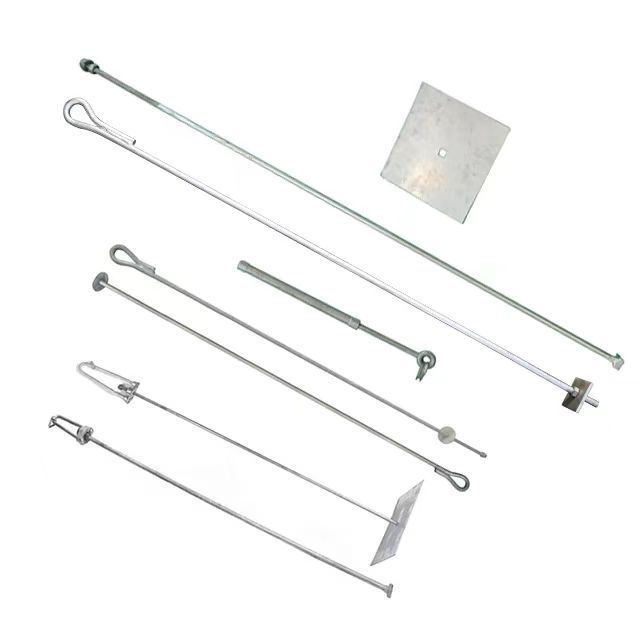
Stay Rod
This stay rod is used to connect the stay wire to the ground anchor, also known as the stay set. It ensures that the wire is firmly rooted to the ground and everything remains stable. There are two types of stay rods available in the market: the bow stay rod and the tubular stay rod. The difference between these two types of power-line accessories is based on their designs.
If you're looking for a reliable, high-speed fibre optic cable solution, look no further than OYI. Contact us now to see how we can help you stay connected and take your business to the next level.
